Available courses

Background

This learning material helps you understand the vital role of the ocean in our lives. It was produced for students in lower and upper secondary schools by Marine SABRES (Marine Systems Approaches for Biodiversity Resilience and Ecosystem Sustainability) project partners in 2025, as a follow-up to the first Marine SABRES School Competition, which took place in 2024 on World Fisheries Day. 

Marine SABRES is a research project funded by the European Union aiming to develop better ways to manage coastal and marine areas in Europe. The overall goal of the project is to support individuals holding a position of power on the ocean to make balanced and well-informed decisions that consider not only economic priorities but also crucial environmental aspects. 

Read more about the project: www.marinesabres.eu

Learning objectives
This learning material will help:
  1. Define the concepts of ecosystem and ecosystem services;
  2. Describe the seven principles of the ocean literacy framework;
  3. Identify the types of services provided by marine and coastal regions across Europe.
Target learners

Lower and upper secondary school students; anyone interested in learning about basic principles of marine biology, ecology and sustainability. Intermediate command of English and an introduction to biochemistry fundamentals are required.

Content

Executive summary
Introduction

Why this learning material
How this learning material was designed
How to use this learning material

1. What makes Earth our home

1.1 What we should know about the ocean
Key definitions in the chapter

2. The ocean for us

2.1 Freshwaters, carbon, and oxygen
2.2 Many features for many habitats
2.3 Interconnected species: food and energy
Key definition in the chapter

3. We for the ocean

3.1 Introduction of invasive alien species and pollution
3.2 Unsustainable fishing practices: overfishing, habitat disruption, bycatch
3.3 Protection
Key definitions in the chapter

4. The real value of the ocean

4.1 Marine ecosystem services

5. References

5.1 Bibliography
5.2 Sitography
Background
Wetlands are the living space for many (protected) species as well as migratory birds and are crucial in providing habitats and water-related ecosystem services. However, pressures such as land reclamation, intense resource exploitation, changes in hydrology, and pollution threaten wetlands.
 

The project RESTORE4Cs aims to create ways to better manage and protect European coastal wetlands and their vital environmental and climate functions.

Read more about the project: https://www.restore4cs.eu/

Learning objectives
This learning material will help:
  1. Define wetland types and their features;
  2. Describe the ecological services provided by coastal wetlands;
  3. Localise important wetland regions across Europe.
Target learners

Lower and upper secondary school students; anyone interested in learning about basic principles of coastal ecology and sustainability

Content

Introduction
Characteristics
Provisioning Services
Regulating Services
Cultural Services & Supporting Services
Main Impacts
Case Pilots in Brief

Valencian Wetlands
Camargue
Ria de Aveiro 12
South-West Dutch Delta
Curonian Lagoon
Danube Delta 15
Protection of Wetlands

References
Conclusions

marine sabres serious game school competition 2026

How to participate
The Marine SABRES School Competition 2026 will take place on Friday, 22 May 2026,  International Day for Biological Diversity and European Maritime Day.

By registering to the Marine SABRES School Competition 2026, you will tutor your students in playing an online serious game.

Your student will discover more about how human communities can manage, protect, and benefit from marine ecosystems.
 

Rules

  1. The game will open on Friday, 22 May 2026 at 09:00 and close on 17:00 CEST. Check your timezone.
  2. You have max 1 hour to complete the game.
  3. Only teachers can log in and play: you are tutoring your students and facilitating their interaction with the serious game.
  4. Each teacher can play only once with the same group of studentsMore than one teacher per school can play, but they must tutor different groups of students.
  5. You must answer each question before moving on to the next one.
  6. You have multiple attempts for each question but the number of available points decreases after each try.
  7. The final score takes into account the total number of earned points and the completion time.

Learning Objectives

By the end of the Marine SABRES School Competition 2026, your students will be able to:

  1. Describe the relationship between us and the ocean;
  2. List rules or tools we can adopt to protect the ocean;
  3. Discuss ideas to help people act better toward the ocean.

Who is invited to participate

Teachers of natural and social sciences, English and CLIL, citizenship, environmental and sustainability education who can tutor lower (10-13 years) and upper (14-18 years) secondary school students across Europe.

Why participate

  • Discover how strong the link between us and the ocean is
  • Improve awareness and attitude towards the marine environment – to which we all belong! 
  • Meet teachers and students from across Europe and learn from peers; 
  • Find the support of a European network of researchers.
About Marine SABRES
Marine SABRES (Marine Systems Approaches for Biodiversity Resilience and Ecosystem Sustainability) is an EU-funded research project aiming to reduce the negative effects of human activities on the ocean and develop well-balanced ways to manage coastal areas.

Read more about the project: marinesabres.eu


What Marine SABRES is about

The Marine Systems Approaches for Biodiversity Resilience and Ecosystem Sustainability project  is an EU-funded research project aiming to:

  • develop better ways to manage coastal areas by taking both environmental needs and economic priorities into account;
  • reduce the negative effects of human activities on the ocean.
Listen to the introduction message by Marine SABRES project coordinator, marine ecologist, and research fellow at MaREI, Emma Verling:

PREMISES | From the clean air we breathe to the nutritious food on our tables, a healthy, biodiverse, and productive ocean is vital to our well-beingNature spontaneously offers both material and non-material benefits, making life on Earth not only possible for us, but also enjoyable thanks to inspiring landscapes and endless opportunities for discovery and learning.

THE PROBLEM | The environment is organised in complex and delicate systems where each and every element plays a role in ensuring positive effects in the long run. Many human activities, including tourism, trade, transport, aquaculture and fisheries can modify natural processes and even damage the environmental capacity to provide the invaluable services we need.

POSSIBLE SOLUTIONS | Marine SABRES brings together international experts across the biological and social sciences to develop better ways to manage coastal areas and reduce the negative effects of human activities on the ocean. The proposed socio-ecological solutions are being co-designed in collaboration with citizens from the three European marine regions of Macaronesia, the Tuscan Archipelago, and the Arctic Northeast Atlantic, and focus on local priorities, including: tourism, fisheries and aquaculture, and protection of flora and fauna.

Read more about the project: www.marinesabres.eu/about


The Marine SABRES School Competition 2025

By registering to the Marine SABRES School Competition 2025, you will tutor your students in playing an online serious game.

Your student will discover more about the links between humans activities, changes in marine ecosystems, and impact on our well-being.

How to participate
The Marine SABRES School Competition 2025 took place on Friday, 21 November 2025, World Fisheries Day.

You can use our learning materials to discover how the ocean plays an essential role in our life. 


Learning Objectives

By the end of the Marine SABRES School Competition 2025, your students will be able to:

  1. Identify human activities that can modify marine ecosystems across Europe;
  2. Describe how human activities can change marine ecosystems processes and functioning;
  3. List possible measures to prevent or correct damages to marine ecosystem services.
Who is invited to participate
  • Teachers of natural and social sciences, English and CLIL, citizenship, environmental and sustainability education who can tutor lower (10-13 years) and upper (14-18 years) secondary school students across Europe.
Why participate
  • Discover how strong the link between us and the ocean is
  • Improve awareness and attitude towards the marine environment – to which we all belong! 
  • Meet teachers and students from across Europe and learn from peers; 
  • Find the support of a European network of researchers.

download iconDOWNLOAD THE BROCHURE


Marine SABRES (Marine Systems Approaches for Biodiversity Resilience and Ecosystem Sustainability) is an EU-funded research project aiming to:

  • develop better ways to manage coastal areas by taking both environmental needs and economic priorities into account;
  • reduce the negative effects of human activities on the ocean.

Read more about the project: www.marinesabres.eu/about


The Marine SABRES School Competition

This School Competition is an informal and playful education activity designed to introduce your classroom to basic concepts of marine biology and coastal ecology.

A series of online quizzes for school students will be launched between 2024 and 2026 as part of the dissemination and engagement activities of the project Marine SABRES.

How to participate
The 2024 edition of the School Competition took place on Thursday, November 21, World Fisheries Day!

Learning Objectives

By the end of the Marine SABRES School Competition, your students will be able to:

  1. Define the concepts of ecosystem and ecosystem services;
  2. Describe the seven principles of the ocean literacy framework;
  3. Identify the types of services provided by marine and coastal regions across Europe.

Who is invited to participate

  • Lower (10-13 years) and upper (14-18 years) secondary schools across Europe;
  • Teachers of natural and social sciences, English and CLIL, citizenship and environmental education.

Why participate 

  • Quiz your class and discover science facts about us and the ocean
  • Improve awareness and attitude towards the environment – to which we all belong! 
  • Meet teachers and students from across Europe and learn from peers; 
  • Find the support of a European network of researchers.


Welcome to the RESTORE4Cs project!

Modelling restoration of wetlands for carbon pathways, climate change mitigation and adaptation, ecosystem services, and biodiversity co-benefits.

RESTORE4Cs mission is to support the implementation of Climate and Biodiversity policies in the context of the European Green Deal, by:
  • gathering effectiveness data on restoration and land use management actions;
  • structuring a European Community of Practice (ECoP);
  • upscaling models and integrative assessment tools;
  • co-designing a multi-actor approach.

Read more about the project: https://www.restore4cs.eu/


The Restore4Cs School Competition

This School Competition is an informal and playful education activity designed to introduce your classroom to basic concepts of ecology of coastal wetlands.

A serious game will be launched as part of the dissemination and engagement activities of the project RESTORE4Cs.

The RESTORE4Cs School Competition will take place on 16 MAY 2025.

How to participate
Registration is now closed.

Learning Objectives

By the end of the RESTORE4Cs School Competition, your students will be able to:

  1. define the concepts of ecosystem and ecosystem services
  2. describe structural and functional characteristic of wetlands
  3. assess the current extent and state of European wetlands

Learning Materials

Do you want to prepare at best for the Serious Game School Competition ?

Deepen your knowledge about coastal wetlands with our supporting learning materials: find out why these ecosystems are so important and what can affect them.

In our learning materials, pay attention to the “main impacts” section and get familiar with the Restore4Cs pilot study sites. Which are they? Where are they located?

Get ready for the Serious Game challenge!


Who is invited to participate

  • Teachers in natural or social sciences, English and CLIL, citizenship and environmental education;
  • Students aged 12 and over, across Europe, who will be mentored by their teachers.

Why participate

Your participation in the Restore4Cs School Competition will allow you to better understand coastal wetlands and meet scientists and researchers who study to protect and preserve these precious ecosystems.

  • Quiz your class and discover science facts about us and coastal wetlands
  • Improve awareness and attitude towards the environment – to which we all belong! 
  • Meet teachers and students from across Europe and learn from peers; 
  • Find the support of a European network of researchers.

If you want know the general characteristics of the ecosystems and learn more on the biodiversity, play this Scientific game.

If you are a child aged six to ten and want explore the distinctive ecosystems of Castelporziano, play this Scientific game. This Scientific game has been created in collaboration with Castelporziano Presidential Estate, National Academy of Sciences.

If you are a middle school student and want test your knowledge on the management and conservation of resources at the Presidential Estate of Castelporziano, play here. This Scientific game has been created in collaboration with Castelporziano Presidential Estate, National Academy of Sciences.

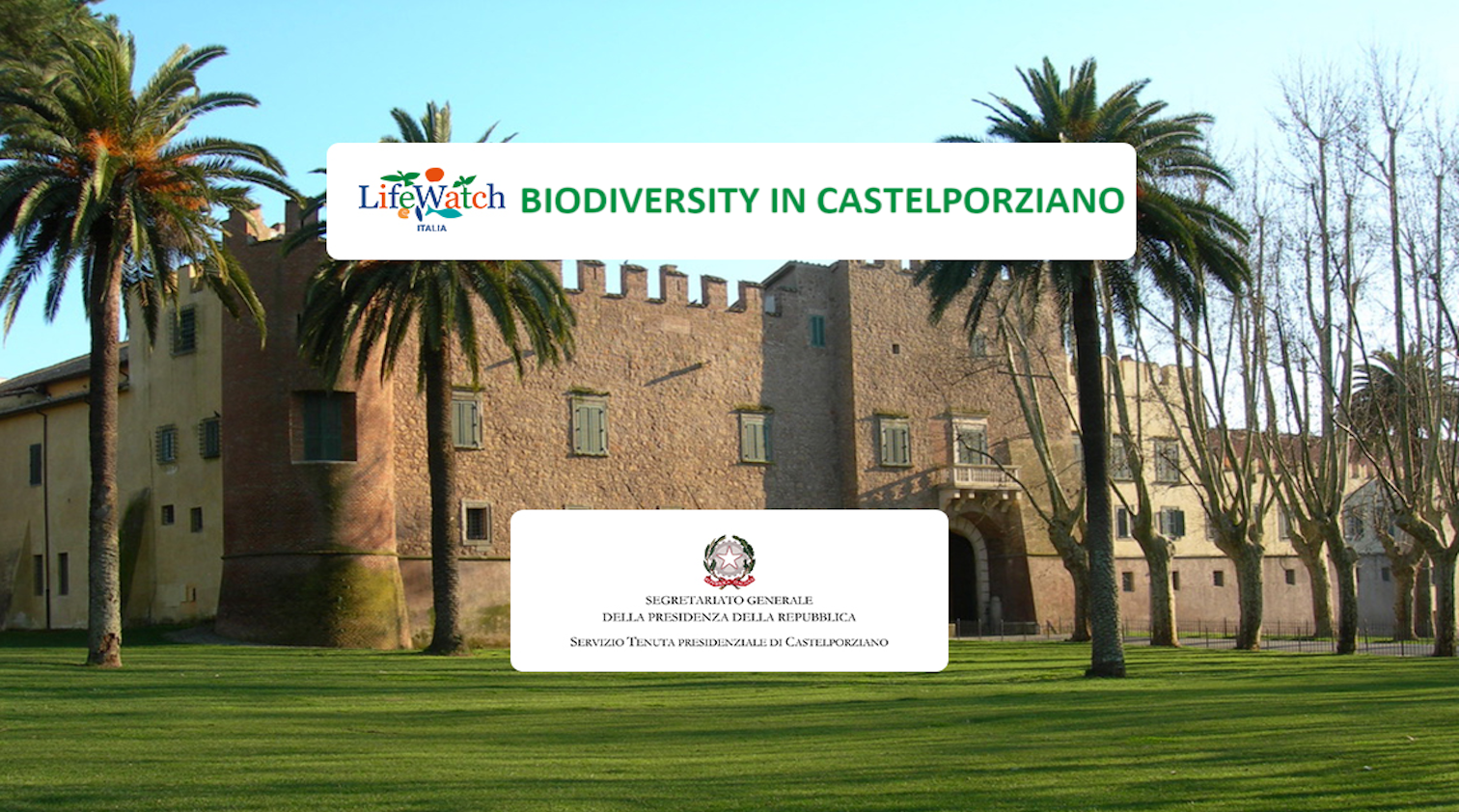
Are you a high school student? Here you can discover the biodiversity heritage of Castelporziano, exploring the ecosystems and species that inhabit them. This Scientific game has been created in collaboration with Castelporziano Presidential Estate, National Academy of Sciences.

Your travel in the Presidential Estate of Castelporziano starts here. If you want explore the artistic and cultural aspects of Castelporziano, traveling into its past and its history, play this Scientific game. This Scientific game has been created in collaboration with Castelporziano Presidential Estate, National Academy of Sciences.

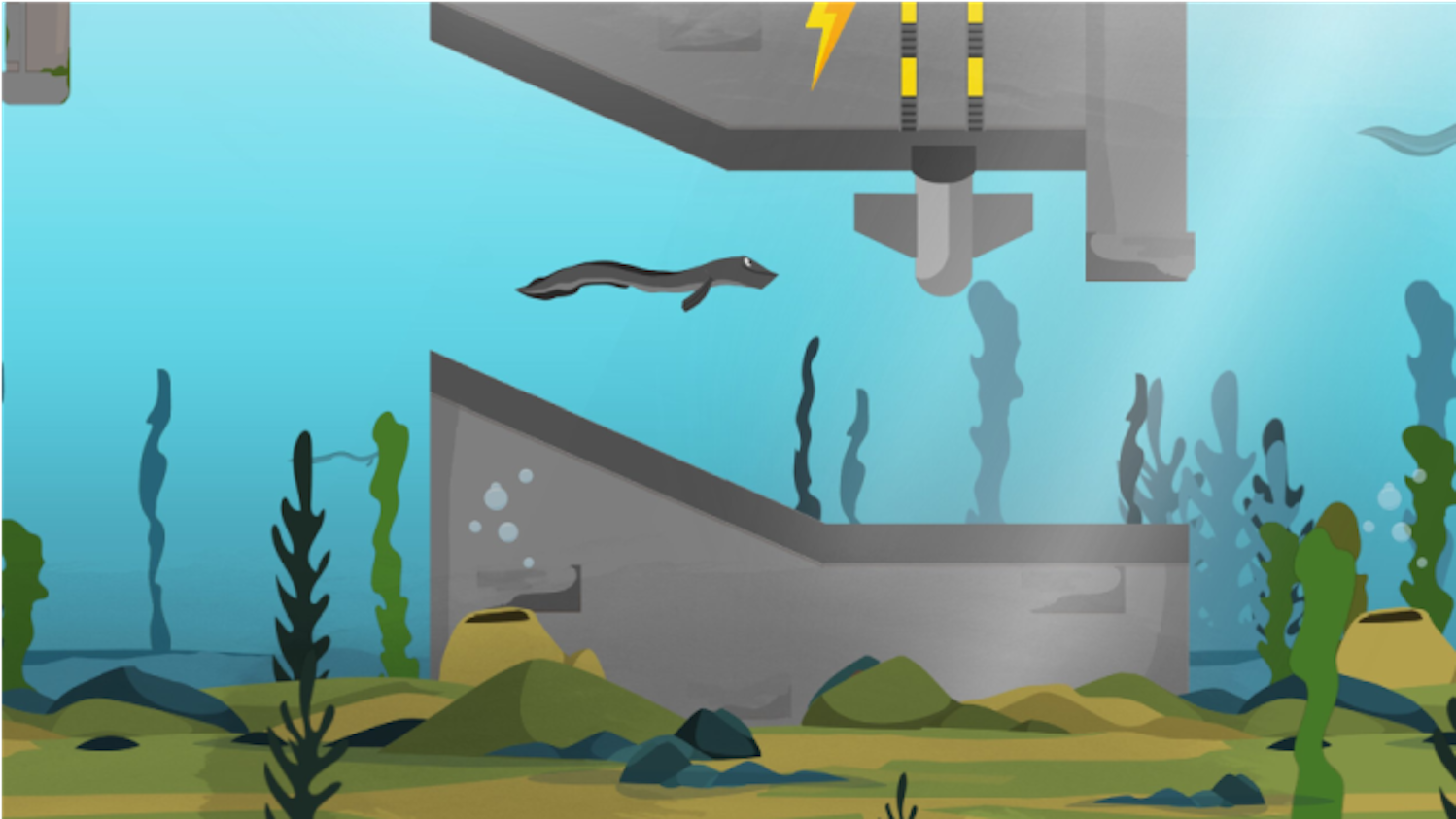
The European eel is one of the most mysterious species of fish in the world. Their migration and spawning life cycles are one of nature's greatest unsolved mysteries. After growing in freshwater and coastal ecosystems in Europe, eels travel back over the Atlantic to the Sargasso Sea to spawn and die. This epic migration is hampered however, due to numerous obstacles blocking their journey. Commercial fishing, pumping plants, dams, weirs, hydropower stations and habitat pollution pose the biggest threat to the eel survival. This is attributing to the 98% decline in the European eel population, making it a critically endangered species. To better understand these migration barriers, Belgian scientists are tagging eels and tracking their journey. This provides information of when eels migrate and what triggers them (precipitation, temperature and discharge) and can aid environmental management to act more effectively when protecting eels during peak migration periods, and working to preserve the eel population.


Are you interested in the impacts about the Mediterranean Sea? Do you want contribute to its protection? Play this Scientific game.

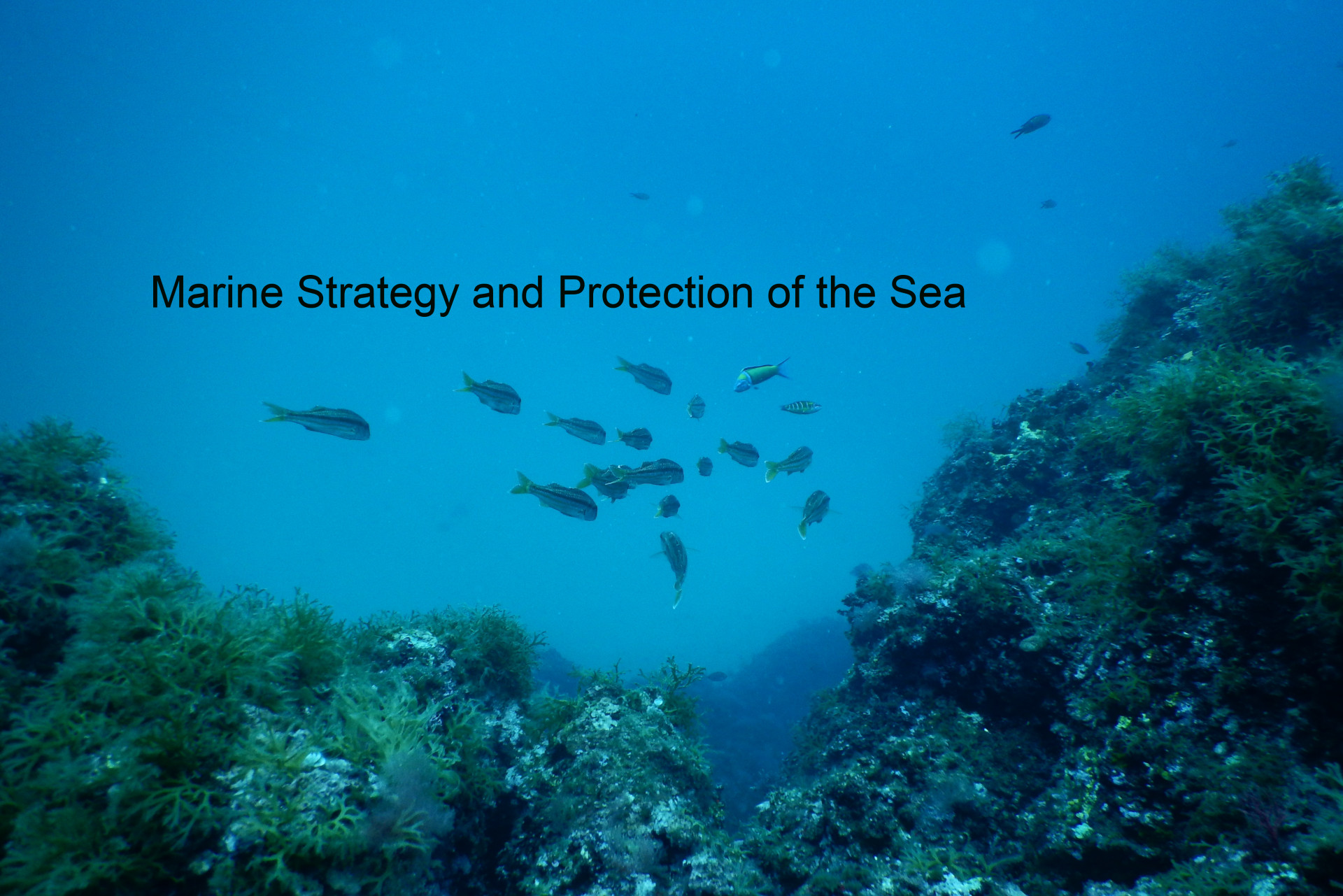
If you want learn more about the European Directive focusing on the protection of the life in the Mediterranean Sea, play here.

Are you curious about the marine biodiversity and the resources of the marine ecosystems? Play here.

To test your knowledge about the major European wetlands, their geography and ecology, play here.

If you want learn more about the abiotic and biotic characteristics of the Sea, play here.

You are about to start a journey to discover how human activities can change coastal and marine ecosystems and their essential functioning. Ready? Play now.

You are about to discover why a sustainable management of European wetlands matters for all of us. Ready? Play now.

You are about to discover how essential the ocean is for our life. Ready? Play now.

To learn more about Earth Sciences and the hydrogeological risks, you can play this Scientific game.

If your interests are on the fascinating world of e-Infrastructures for supporting advanced research, play here.

Do you know how the scientific method is applied? Here, you can find notice. Research Game is a game produced in a Comenius Project (The European Scientific Research Game) which aims at motivating secondary school students through the experience of the excitement of scientific research.

MEDREGION Scientific Gaming allows to study and apply the method of scientific research applied to the monitoring of ecological and environmental status of Mediterranean marine ecosystems in a entertaining way through the use of a video game focused on ecological tools useful to describe the marine ecosystem status, such as biodiversity, water noise, eutrophication, alien species and on the approach of the Marine Strategy Framework Directive.
MEDCIS Scientific Gaming allows to study and apply the method of scientific research applied to the monitoring of ecological and environmental status of Mediterranean marine ecosystems in a entertaining way through the use of a video game focused on ecological tools useful to describe the marine ecosystem status, such as biodiversity, water noise, eutrophication, alien species and on the approach of the Marine Strategy Framework Directive.

Are you curious in ecological thems such as biodiversity and ecosystems, natural risks, computing environment, marine science? ENVRIplus can answere to your curiosity. It is driven by three overarching goals: 1) favouring cross-fertilization between Research Infrastructures, 2) implementing innovative concepts and devices across Infrastructures, and 3) facilitating research and innovation in the field of environment to an increasing number of users outside the Research Infrastructures.

If you are interested to protected areas and Earth observations visit this section devoted to ECOPOTENTIAL project. It focuses its activities on a targeted set of internationally recognised Protected Areas, blending Earth Observations from remote sensing and field measurements, data analysis and modelling of current and future ecosystem conditions and services. It include a Scientific game.

Test your skills in scientific research with the CASCADE science game. Through this game, you can improve your knowledge of how science studies the world around us and you will learn how to plan exciting new research in marine ecology. You will examine your background on marine ecosystems, learn more about biodiversity, and test your knowledge of marine impacts.


This is a study-lab course in which topics are presented by short texts, practical sessions are introduced and explained and assignments are completed  by students. It is made of seven units: three theoretical units, each followed by a practical unit. In order to exemplify the use of the proposed  methods and models, a final unit is devoted to a case study on benthic macroinvertebrates in the Po River delta, providing the data, the R code and some interpretative comments. Practical units are based on the use of the R software, with purpose-specific libraries and functions. Quizzes are given following every unit, together with practical assignments to be addressed with the R software.

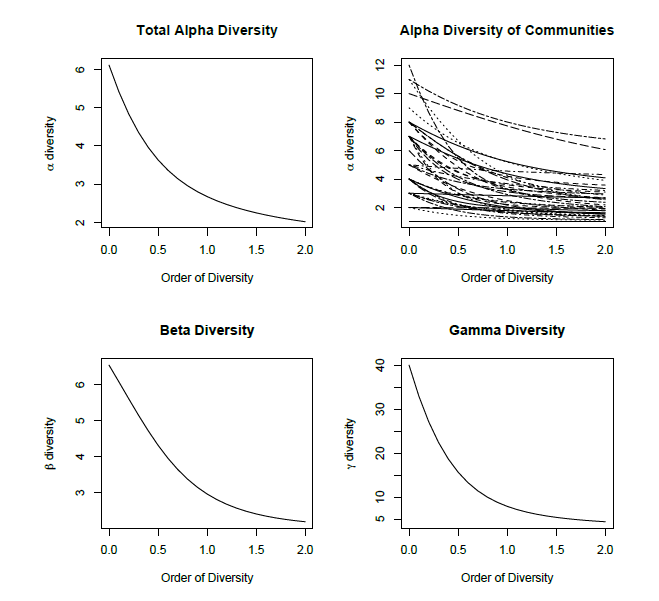
After this introductory unit, the first practical unit will be devoted to briefly introduce the R software. Biodiversity partitioning will be the subject of the next two units, where methodology and software for γ , α and β diversity profiling will be described and applied to a sample data set. The theory behind mixed effects modeling will be sketched and applied to investigate the variation of biodiversity measures. The last practical unit exemplifies the use of the R implementation of mixed effects modeling routines with data from ecological surveys. Finally we will summarize and exemplify the proposed methods with the complete analysis of a case study.

Background

The Incidence Function Model describes presence/absence of a species in the patches of a highly fragmented landscape at discrete time intervals (years) as the result of colonization and extinction processes. The IFM ignores local dynamics since they are faster than metapopulation dynamics in producing changes in the size of local populations (Hanski, 1994). In the IFM, the process of occupancy of patch is described by a first-order Markov chain with two states, {O, i} (empty and occupied, respectively). The extinction probability of a population in a patch is constant in time and is assumed to decrease with increasing patch area, and the colonization probability is assumed to be a sigmoidal function increasing with connectivity. The IFM is the best known spatially explicit metapopulation model in literature. This model has been applied to conservation problems and to area-wide pest-management.

Sound knowledge of Probability and Statistics and basic elements of any programming language is recommended.


Learning Objectives

It is expected that, with this tutorial, participants will be better positioned to:

1. Present the basic elements of discrete, finite-state Markov chains and the mathematics of the IFM;

2. Illustrate model parameters and performances in terms of metapopulation dynamics;

3. Examine the framework of IFM model applicability, how it works and its limitations;

4. Discuss variations to the basic model (rescue effect, time-dependent colonization probabilities);

5. Assess the use of the free software R for data representation, parameter estimation and model simulation.


Contents and Structure

Training Blocks:

1. The ecological problem and the Incidence Function Model;

2. Discrete time, finite state and Markov Chains;

3. The Incidence Function Model;

4. Model Simulation;

5. Model Parameters;

6. Parameter Estimation;

7. Application to Ecological Issues.


Target Audience

The training is intended for researchers in the field of ecological applications aiming at improving their quantitative background and interested in applying a stochastic model to analyse metapopulation dynamics and eventually obtain quantitative information for management.


Production

LifeWatch Italy

Background

Species Distribution Modelling (SDM) is a technique widely used in many fields of natural and biological sciences to infer the ecological requirements of species and to predict their geographic distributions (Elith & Leathwick, 2009). Species distribution models can be used to support conservation decision making (Guisan et al., 2013). Forecasting endangered species distribution under climatic change scenario is increasingly used in conservation biology (Muñoz et al., 2013), while forecast the spread of invasive species is receiving a growing interest in invasion biology (Verbruggen et al., 2013). The aim of SDMs is to infer the probability of occurrence of a taxon given a set of variables (climate, elevation, soil type, etc.) that are assumed to be related to the distribution and habitat preferences of the taxon under study. 

This resource is a technical guide aimed at providing the basic elements needed to build a Species Distribution Model. 

Specific knowledge of the topic is not mandatory. However, in order to have a correct understanding of the information contained in the tutorial, and even more for a proper interpretation of the output, some basics of statistics (e.g., notions of modelling like GLM, GAM, etc.) and a sound knowledge of the statistic environment of R is recommended.


Learning Objectives

It is expected that, with this tutorial, participants will be better positioned to:

1. Illustrate distribution model concepts and how it applies to ecology, evolutionary biology and conservative biology;

2. Discuss procedures to obtain free occurrence database and techniques for cleaning and validating occurrency data;

3. Examine algorithms for modelling species occurrence and tests for evaluating robustness of the analysis;

4. Assess validity and correctness of output interpretation;

5. Simulate all the steps needed to realize a species distribution model (SDM) of a species of choice.


Contents and Structure

Training Blocks:

1. Occurrence data;

2. The environmental variables;

3. Running the analysis;

4. The output interpretation and test of robustness;

5. Survey of available software.


Target Audience

The tutorial is aimed at both students and researchers, that have the need or the interest to acquire the basic knowledge on how to realize a distribution model.


Production

LifeWatch Italy

Biodiversity data publishing is critical for several reasons, ranging from scientific research and conservation to policy-making and education. Darwin Core, a standardized framework for sharing biodiversity information, plays a crucial role in facilitating the effective use of biodiversity data. We this approach we are responding to the lack of knowledge about the geographical distribution of species and to the lack of knowledge about the abundance of species and their population dynamics in space and time.

This resource is aimed at biologists at all levels, including MSc. and Ph.D. students in early stages of their thesis.

Background
The Autumn Data School is an 3-day training workshop designed and host in collaboration between LifeWatch, its Belgian, Greek and Italian National Nodes and EMODnet Biology. EMODnet provides access to data from a wide range of sources and pursues inclusion of new and historical data sets.

Contents and Structure

  • Day 1: Policy, Scientific, and Technical context
  • Day 2: Data Standardization and Data Quality

The first two days are organized as a DATAthon focusing on transferring knowledge on data lifecycle management best practices. A group of researchers from the African Mediterranean countries will bring their own dataset to work on and follow all the steps up to its final submission to Marine Research Repositories, such as MedOBIS and the LifeWatch ERIC Metadata Catalogue, with the focus on facilitating its reuse.

  • Day 3: Data Rescue via Citizen Science Platforms

The third day focuses on teaching participants how to use Citizen Science platforms, such as Zooniverse and the LifeWatch Citizen Science Platform. The purpose of this training session is to create a Citizen Science project and engage volunteers in the historical data rescue and standardization process. For this session two historical datasets and a new dataset are selected by the organizers to work with, based on the work done in the previous phase of the EMODnet Biology IV.

Learning Objectives
It is expected that, by the end of the workshop, participants will be better positioned to:

  • Understand the FAIR principles by explaining why sharing data is important and why data standards are beneficial
  • Discuss Darwin Core principles and recognise Darwin Core terms
  • Apply Darwin Core standards to your own dataset's format
  • Experiment with Citizen Science online tools as the LifeWatch Citizen Science Platform and Zooniverse

Target Audience
Marine biologists, ecologists, data stewards, data managers, citizen science practitioners.

Background
In recent years, one of the major challenges in Environmental and Earth Sciences has been managing and searching larger volumes of data, collected across multiple disciplines. Many different standards, approaches, and tools have been developed to support the Data Lifecycle from Data Acquisition to Data Curation, Data Publishing, Data Processing and Data Use. In particular, modern semantic technologies provide a promising way to properly describe and interrelate different data sources in ways that reduce barriers to data discovery, integration, and exchange among biodiversity and ecosystem resources and researchers. This course is built as a five-day intensive school providing the knowledge on how to create semantic artifacts for a specific domain and use them to annotate and analyse data in a Virtual Research Environment.

Learning Objectives
It is expected that, by the end of the course, participants will be better positioned to:
1. Compare the most important approaches to Semantic Web and Ontology Engineering, presenting their main characteristics
2. Discuss the main steps of the design and development of ontologies and semantic artifacts repositories
3. Examine the most critical elements and tools for designing thesauri
4. Demonstrate how to annotate and query your data in a Virtual Research Environment
5. Create your Virtual Research Environment, using tools such as NaaVRE

Contents and Structure

Training Sessions:

  • Day 1 – Welcome
  • Day 2 – Semantic Web and Ontology Engineering (Theory and Practice)
  • Day 3 – Design Thesauri and Annotate your data (Theory and Practice)
  • Day 4 – AI and Ontologies
  • Day 5 – Closing

Target Audience
The School is mainly aimed at IT architects, Research Infrastructure (RI) service developers and user support staff, and RI staff.

The Summer School, now at its fifth edition, is organised by ENVRI-FAIR and LifeWatch ERIC and will take place in Lecce, Italy, from 10–15 July. It covers topics such as user interfaces, packaging of services, reusability and validation of services, and building and supporting networks through the lens of the ENVRI-Hub approach.

Background 

In recent years, one of the major challenges in the Environmental and Earth Science has been managing and searching larger volumes of complex data, collected across multiple disciplines. Many different standards, technologies and common practices have been developed to support each phase of the Data Lifecycle. This course focuses on the creation and reuse of FAIR data and services in the Environmental and Earth sciences.


Learning Objectives

It is expected that, by the end of the course, participants will be better positioned to:

1. Discuss basic concepts of semantics presenting how they can enrich data resources, enhance FAIRness and foster discoverability of data resources

2. Examine the full life cycle of an 'on demand' model run and results visualization for the creation of a new data product.

3. Illustrate how resources (datasets, services, workflows) can be created, published and accessed on a metadata catalogue (LifeWatch ERIC Metadata Catalogue).

4. Demonstrate the basic steps to run a legacy application in cloud, develop native cloud applications, automate application deployment and auto-scale a runtime application.


Content and Structure

Training Sessions:

1. Semantics

2. VREs, Data analysis and Visualization

3. Resource Access Tools

4. Cloud computing for developing and operating data management services 


Target Audience

The resource is aimed at data centres staff, RIs representatives, IT experts and individuals interested in data access and discoverability.

Background
This fourth edition of the ENVRI FAIR School represents another unmissable opportunity to learn about FAIRness in the framework of Research Infrastructures. After dealing with Data FAIRness and Data Management during previous editions, this edition of the school focuses on Services for FAIRness, from their design to their development and publication.
 
Learning Objectives
It is expected that, by the end of the course, participants will be better positioned to:
1. Examine approaches and methodologies to webservices for data
2. Map tools and their related characteristics
3. Illustrate potential security threats and related solutions
4. Design (step by step) data services 
5. Develop and publish a data service
 
Contents and Structure
Training Sessions:
1. Overview on the ENVRI project and goals
2. Design webservices for data
3. Develop webservices for data
4. Publish and secure data services by means of APIs
5. Best practices and lessons learned (experts panel)
 
Target Audience
The resource is aimed at ENVRI data centres staff, RIs representatives, IT experts, researchers and PhD candidates and individuals interested in developing webservices.

Background 

The ENVRI Community International Winter School 2021 'ENVRI-FAIR Resources: Access & Discoverability' focuses on Data FAIRness focuses and covers semantic navigation, Jupyter environments for visualisation and data discovery, resource access tools and cloud computing. Aiming at supporting end users to make the best use of the data, the School establishes the end user perspective as a crucial element to develop good user interfaces and services to interact with data.


Learning Objectives

It is expected that, by the end of the course, participants will be better positioned to:

1. Discuss basic concepts of semantics presenting how they can enrich data resources, enhance FAIRness and foster discoverability of data resources

2. Examine the full life cycle of an 'on demand' model run and results visualization for the creation of a new data product.

3. Illustrate how resources (datasets, services, workflows) can be created, published and accessed on a metadata catalogue (LifeWatch ERIC Metadata Catalogue).

4. Demonstrate the basic steps to run a legacy application in cloud, develop native cloud applications, automate application deployment and auto-scale a runtime application.


Content and Structure

Training Sessions:

1. Semantics

2. VREs, Data analysis and Visualization

3. Resource Access Tools

4. Cloud computing for developing and operating data management services 


Target Audience

The resource is aimed at data centres staff, RIs representatives, IT experts and individuals interested in data access and discoverability.

The Master in e-Biodiversity and Ecosystem Sciences (EBES) degree is offered by the University of Salento and LifeWatch ERIC, to prepare the next generation of professionals to apply data tools and concepts to ecology, and develop innovative, interdisciplinary solutions to environmental issues.

LifeWatch ERIC, together with the University of Salento (and soon also the Ionian University in Corfu), offers students who enrol in this master’s degree the opportunity to combine these disciplines in a single professional development programme in this exciting new field. e-Biodiversity and Ecosystem Sciences (EBES) is the newest International M.Sc. available at UniSalento as a double degree and exclusively taught in English.

A new generation of scientists and experts is needed in e-biodiversity and ecosystem sciences, professionals who are trained to apply data science tools and concepts to ecology, and develop innovative solutions to these key issues, and others, by blending the sciences and working in interdisciplinary teams.

Global challenges, like the climate crisis and the current COVID-19 pandemic, call for a deeper understanding of ecological phenomena at various levels of scale, to identify patterns and underlying mechanisms of biodiversity organisation and ecosystem functioning, and design scenarios of future change.

Science is changing: informatics and data are becoming ever more prominent and are opening up new opportunities to advance our knowledge and provide science-based solutions to society’s needs. We have big data but we lack the ability to take full advantage of them.

Thanks to this strategic partnership with LifeWatch ERIC, students of the Master in e-Biodiversity and Ecosystem Sciences will have the unique opportunity to spend from 6- to 12-month mobility periods abroad during their second year, taking advantage of dedicated LifeWatch ERIC fellowships or those of the ERASMUS+ programme. EBES students will also be welcomed within the LifeWatch ERIC Partner Institution Network, offering access to infrastructure facilities and Virtual Research Environments to work on their master’s thesis.

To facilitate the use of the LifeWatch Belgium web services, several applications and tools were documented in use cases and tutorials.

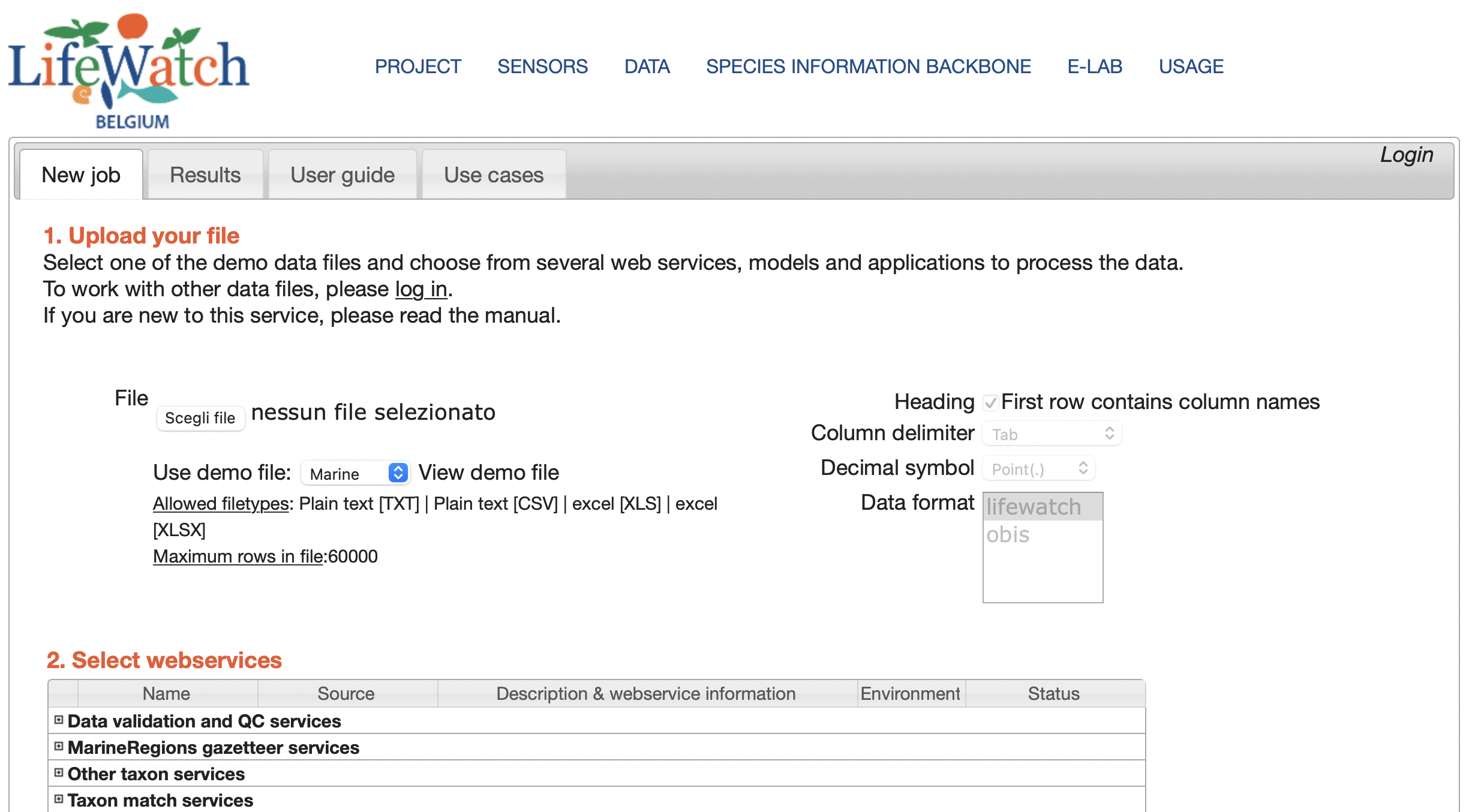
The Belgian LifeWatch E-Lab online application allows users to standardize, analyze and visualize their data, making use of web services built on top of internal and external reference databases. A user can select several data services (taxonomic, geographic, thematic, etc.) and run them successively through a straightforward user interface. As explained in the user guide, the LifeWatch.be web services can be used in a concatenated way, i.e. the output of one web service is the input for the next web service. Establishing such workflows helps solving (complicated) biological questions, illustrated in this and other use cases.


To facilitate the use of the LifeWatch Belgium web services, several applications and tools were documented in use cases and tutorials.

The Belgian LifeWatch E-Lab online application allows users to standardize, analyze and visualize their data, making use of web services built on top of internal and external reference databases. A user can select several data services (taxonomic, geographic, thematic, etc.) and run them successively through a straightforward user interface. As explained in the user guide, the LifeWatch.be web services can be used in a concatenated way, i.e. the output of one web service is the input for the next web service. Establishing such workflows helps solving (complicated) biological questions, illustrated in this and other use cases.


To facilitate the use of the LifeWatch Belgium web services, several applications and tools were documented in use cases and tutorials.

The Belgian LifeWatch E-Lab online application allows users to standardize, analyze and visualize their data, making use of web services built on top of internal and external reference databases. A user can select several data services (taxonomic, geographic, thematic, etc.) and run them successively through a straightforward user interface. As explained in the user guide, the LifeWatch.be web services can be used in a concatenated way, i.e. the output of one web service is the input for the next web service. Establishing such workflows helps solving (complicated) biological questions, illustrated in this and other use cases.

To facilitate the use of the LifeWatch Belgium web services, several applications and tools were documented in use cases and tutorials.

The Belgian LifeWatch E-Lab online application allows users to standardize, analyze and visualize their data, making use of web services built on top of internal and external reference databases. A user can select several data services (taxonomic, geographic, thematic, etc.) and run them successively through a straightforward user interface. As explained in the user guide, the LifeWatch.be web services can be used in a concatenated way, i.e. the output of one web service is the input for the next web service. Establishing such workflows helps solving (complicated) biological questions, illustrated in this and other use cases.

Background

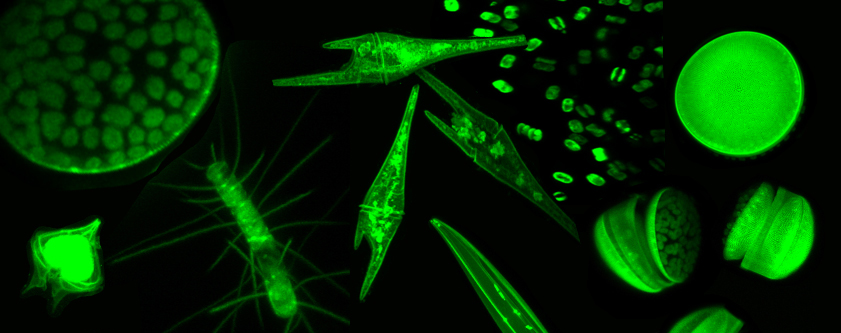
Phytoplankton plays an important role in aquatic ecosystems as it accounts for most of global primary production and affects the biogeochemical processes, trophic dynamics and biodiversity architecture. LifeWatch Italy, one of the ERIC's national nodes, designed the Phytoplankton Virtual Research Environment (Phyto VRE) to support researches on phytoplankton guilds and their relative structure, organization and ecological function. The Phyto VRE services, in fact, enable researchers to analyse and process phytoplankton data at a level of resolution from individual cells to whole guilds. In particular, the Atlas of Phytoplankton and the Atlas of Shapes provide harmonised data on taxonomy and morphological and demographic traits.
 

Learning Objectives

It is expected that, with this tutorial, participants will be better positioned to:

1. Illustrate how to access and navigate the two Atlas of the Phyto VRE;

2. Discuss the main characteristics of a phytoplankton species;

3. Examine the possible shapes of a phytoplankton species;

4. Present the computational models for surface area and volume of phytoplankton species.


Contents and Structure

Training Blocks:

1. Introduction to Phytoplankton Species and Shapes;

2. Atlas of Phytoplankton;

3. Atlas of Shapes;

4. Presentation of Computational Model service;

5. Overview of LifeWatch Italy Phytoplankton VRE services.
 

Target Audience

The resource is aimed at marine, transitional and freshwater scientists and students involved in phytoplankton identification, classification, morphological traits association and measurement.


Production

LifeWatch Italy

Background

The workflow assesses habitat vulnerability to the introduction and establishment of Invasive Alien Species (IAS) and the cumulative effects of their negative impacts, and is available through LifeWatch Tessaract at:  https://tesseract.lifewatch.dev/biotope/create-workflow-cimpal.

Learning Objectives

This tutorial will allow you to:

  1. Design the input datasets in the required file extension and layout, according to your impact assessment framework of choice;
  2. Identify the provided parameters and the paths to the input files;
  3. Examine the generated workflow output files.
Content
Before running the workflow
Accessing the workflow
1.-2. Workflow overview and description
3. CIMPAL grid size
4. Occurrences and taxa
5. Taxa
6. CIMPAL paths of introduction
7. Weight file
8. Biotope
9. Zones file
10.-11. Creating and launching the workflow
Dashboard

Target Audience
The Workflow was created to support researchers and decision makers working on the management of impacts by Invasive Alien Species (IAS). The workflow outputs will help users to define target intervention areas, where the cumulative impacts of AIS are higher, and to make a better use of limited resources.
 
Prerequisites

Workflow users should:

  1. Have previous knowledge about the impact of invasive species;
  2. Be able to run and access GIS data;
  3. Be able to edit different data file formats (TSV, CSV, etc.). 

Background

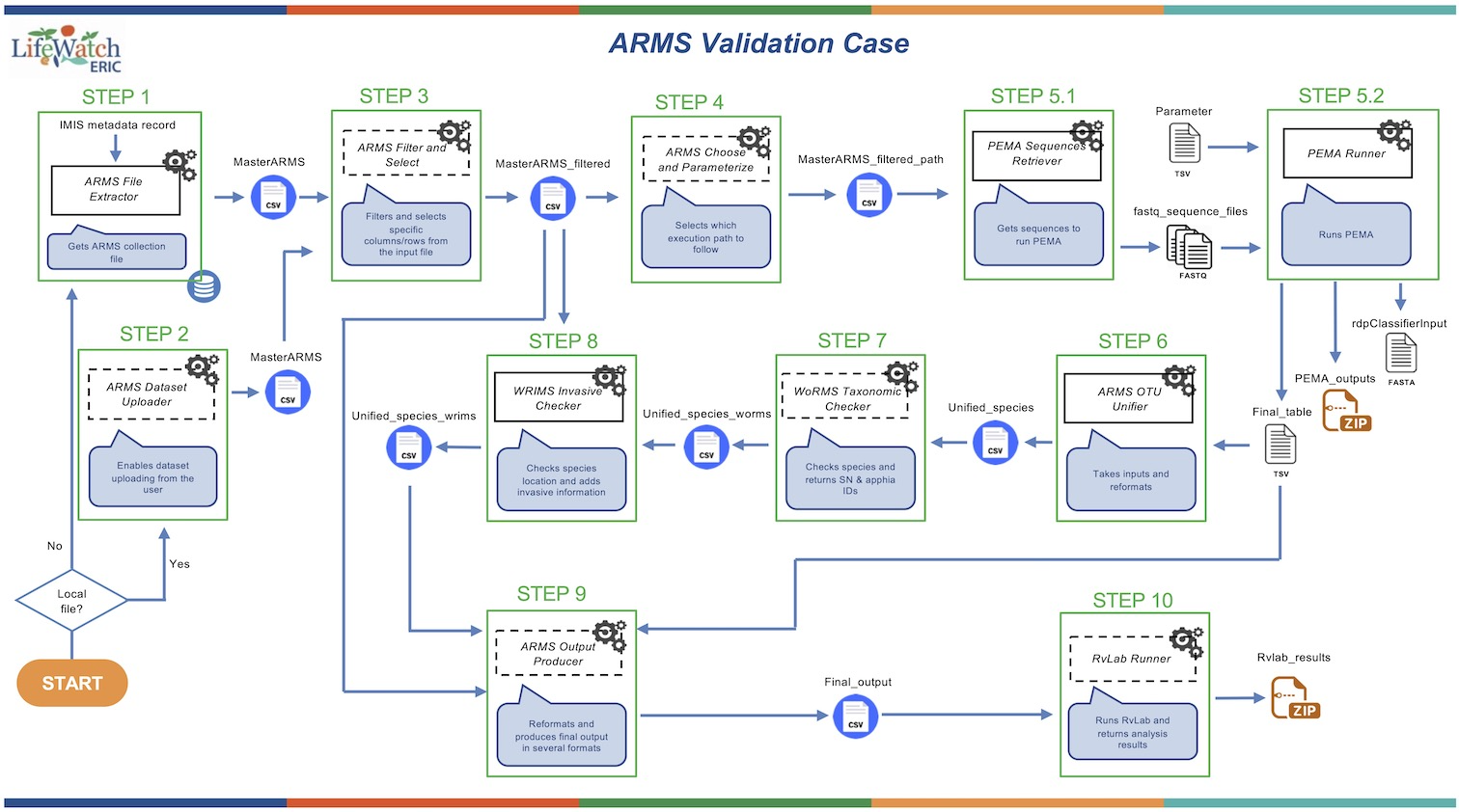
The workflow on “Autonomous Reef Monitoring Structures (ARMS)” is conceived to produce data files that can then be used to indirectly answer a large spectrum of ecological questions related to the monitoring of hard bottom communities of near coast environments, e.g., highlighting changes and trends in community composition. This workflow operates as a data chaining pipeline that uses data collected by a network of ARMS placed in the vicinity of marine stations and Long-term Ecological Research sites (LTER) to produce community data files that can be subsequently analysed elsewhere (e.g., in R) to check whether species detected in the samples are alien to the location. 


Learning Objectives

It is expected that, by the end of the course, participants will be better positioned to:

1. Examine the technical requirements of the workflow’s services;

2. Process the services included in the workflow;

3. Run the workflow successfully;

4. Identify and troubleshoot problems that may arise while running the workflow.


Contents and Structure

In this training the user will be guided through the use of the workflow steps and ICT services developed in the Tesseract Virtual Research Environment (VRE) of LifeWatch ERIC.

Contents:

1. Access and navigate the Tesseract VRE.

2. Step-by-step demonstration on how to run the workflow services (video resource);

3. Technical requirements of each service/step (PDF doc);

4. Link to additional information on the validation case, including an open knowledge map;

5. Scientific presentation of the case study (video resource);


Target Audience

This training is aimed at early career researchers and anyone interested in learning how to run the “Autonomous Reef Monitoring Structures (ARMS)” workflow.

Background

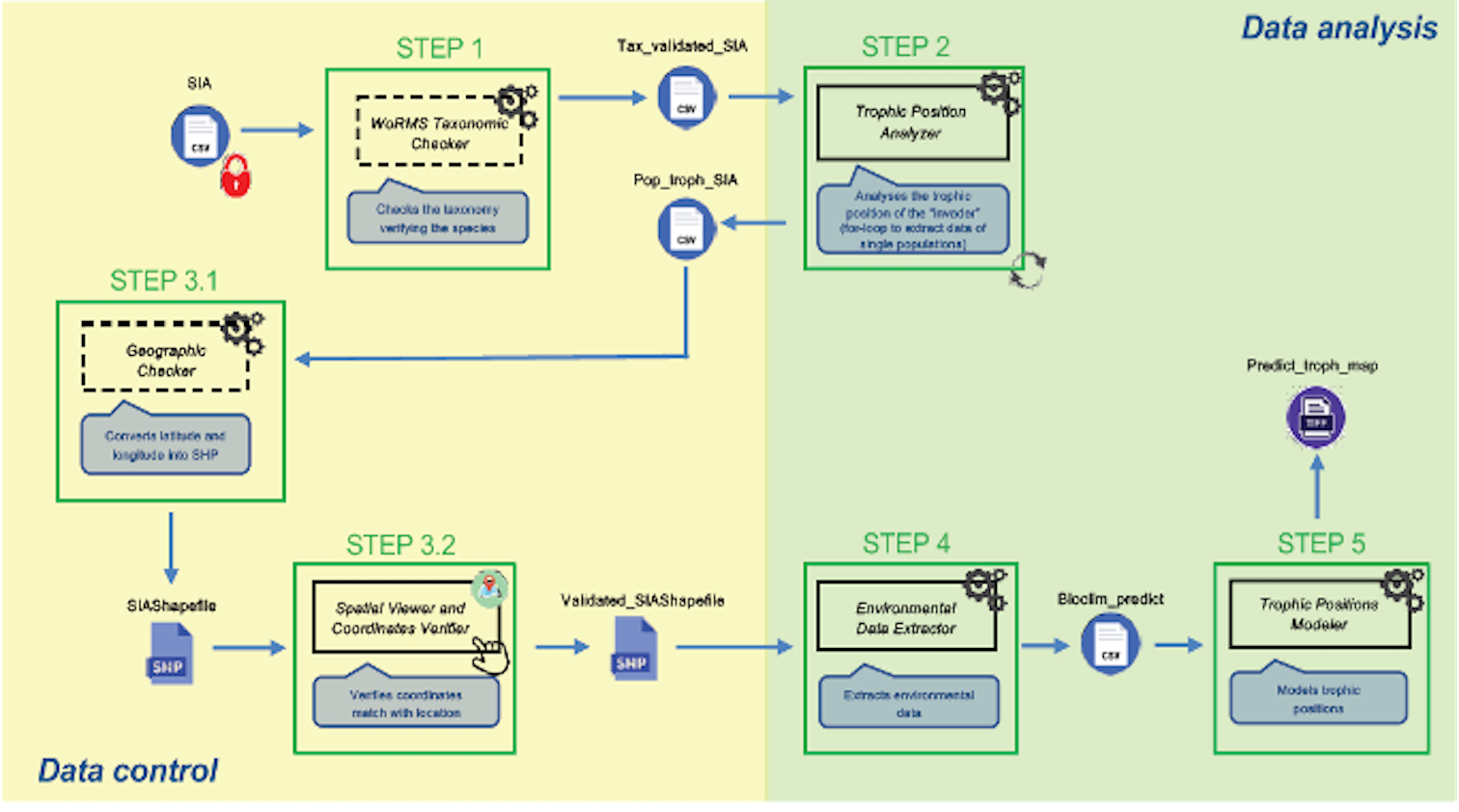
The analytical workflow on “Functional biogeography of alien species” is conceived to address scientific questions on the ecological processes following the introduction of alien species. It evaluates and measures the impact of alien species on native communities by studying changes in functional traits (i.e. trophic position of the invader) and seek associations between those changes and environmental variables that could influence post-invasion shifts of the invader trophic positions. This workflow operates as an analytical pipeline using isotopic data of invasive species and their potential prey within the invaded food-webs.


Learning Objectives

It is expected that, by the end of the course, participants will be better positioned to:

1. Examine the technical requirements of the workflow’s services;

2. Process the services included in the workflow;

3. Run the workflow successfully;

4. Identify and troubleshoot problems that may arise while running the workflow.


Contents and Structure

In this training the user will be guided through the use of the workflow steps and ICT services developed in the Tesseract Virtual Research Environment  (VRE) of LifeWatch ERIC.

Contents:

1. Access and navigate the Tesseract VRE.

2. Step-by-step demonstration on how to run the workflow services (video resource);

3. Technical requirements of each service/step (PDF doc);

4. Link to additional information on the validation case, including an open knowledge map;

5. Scientific presentation of the case study (video resource);


Target Audience

This training is aimed at early career researchers and anyone interested in learning how to run the “Functional biogeography of alien species” workflow.

Two webinars on “Designing and Developing Data Services for End Users” organized in preparation for the ENVRI Community International Summer School 2022 "Road to a FAIR ENVRI-Hub: Designing and Developing Data Services for End Users”.

The webinars, aimed at IT architects, Research Infrastructure (RI) service developers and user support staff, and RI staff working on user interaction and community/network building, can also be taken as stand-alone sessions.

The RDA I-ADOPT framework offers a way to compile clear and unambiguous definitions of variables in a standardised way. It helps you to describe concepts at different levels, ranging from overarching classes (“soil composition”) down to the very detailed (“soil water content, measured in a mineral soil matrix below root depth”).  

You can create and register your own definitions, or reuse those of others, and once in place use them to tag your RI’s datasets. The formalized descriptions empower FAIR in many ways, for example by facilitating searches across data portals (F+A) and enabling machine-driven interpretation and use of data and metadata (I+R).

This workshop showcases the results of five research endeavours into Non-indigenous and Invasive Species conducted in the midst of the LifeWatch ERIC Internal Joint Initiative. It also presents the Tesseract workflows created by the ICT-Core to accommodate the analytical processes required for these researches.

The hands-on session navigates the LifeWatch ERIC Metadata Catalogue and LifeWatch ERIC Tesseract (workflows and VREs).

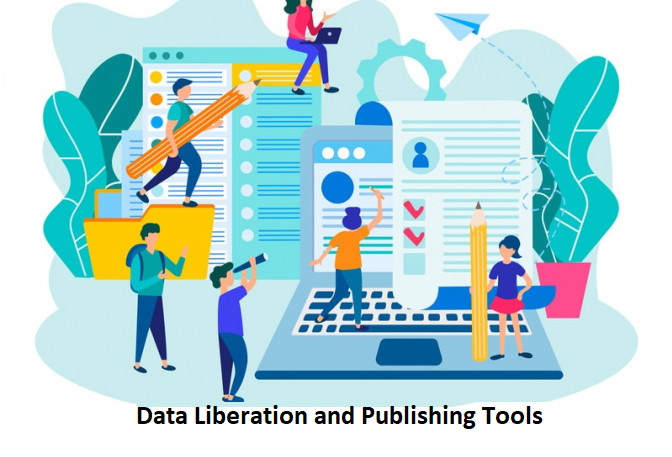
The Data liberation and Publishing tools course aims to tackle both sides of the publication process: 

  1. the annotation, preservation and dissemination of data extracted from the literature by utilising the right pipelines and mechanisms;
  2. the publication of prospective scientific literature and data in advanced ways to support easier and efficient (re)sharing and (re)use of biodiversity data contained in an academic publication. 

The course intends to showcase modern ways to complete the cycle of biodiversity data usage, including how to harvest, access, publish, preserve and cite scientific data and literature.

The Data liberation and Publishing tools course contains three modules:

  1. Introduction: a brief overview of the current issues in biodiversity data publication and extraction; and an introduction of two key players addressing these issues: Plazi and Pensoft. 

  2. Data liberation: a learning resource designed to inform about the benefits of data liberation tools, including the services provided by the Plazi workflow. This module is to also provide knowledge and practical skills necessary to contribute to the digitisation and standardisation of taxonomic literature. 

  3. Publishing tools: a learning resource designed to inform about the benefits and features of the latest semantic technologies and formats in the context of biodiversity data, scientific publications and scholarly journals. This module is to also demonstrate how the scholarly publishing process can be streamlined, in order to assist researchers and scientific journals publish, share and preserve their biodiversity research in compliance with the FAIR data principles.

Both the Data liberation and the Publishing tools modules refer to two tools devised within the EU-funded project: Biodiversity Community Integrated Knowledge Library (BiCIKL), and featured in the Biodiversity Knowledge Hub (BKH).

Description

This course presents the BKH services. Video Tutorials, Training Materials, and use cases are presented, offering a full overview of the biodiversity data workflow and the data transfer mechanisms available.

Objectives

By the end of this course, participants will be able to:

  1. Explore the BKH Services and get familiarized with their use.
  2. Get an introduction to the specific functionalities of each service.
  3. Introduce the use of the BKH services to their everyday practices. 

Description 

This course presents an introduction to the BKH. It presents the structure of the BKH, the FAIR Data Place section and its key role in the openness of the data.

Objectives

By the end of this course, participants will be able to:

  1. Understand the features and benefits of the BKH.
  2. Navigate the BKH platform confidently.
  3. Understand the transfer mechanisms and the workflow of biodiversity data.

A collection of online training resources on the topic of FAIRness relevant for BioDT. The collection includes: guidelines on Research Object Crate (RO-Crate), the main metadata format used within the project; online books covering many different aspects related to open science; and FAIR-IMPACT's Metrics for software and FAIR-IMPACT's Catalogue of Resources.

A collection of video tutorials on the LEXIS platform and its usage. The collection also includes some BioDT- specific video tutorials on the usage of r4lexis and usage of r4lexis in R Shiny app.

This pDT features a user-friendly interface built using the R Shiny framework, enabling users to interact with the models and visualise the outputs easily. The interface presents two interactive maps—one for recreation potential and one for biodiversity distributions. Users can explore species distribution predictions, recreation potential for different personas, and identify areas of high cultural ecosystem service value.

This pDT is designed to serve a broad range of users including those who want to explore natural areas and contribute to citizen science programs can use the pDT to personalise their experiences and understand the biodiversity they encounter. In addition Land Managers and Policy-Makers can use the pDT to make informed, evidence-based decisions on managing cultural ecosystem services, balancing conservation efforts with the needs of recreational users.

The Prototype Biodiversity Digital Twin (pDT) for Honey Bees is an advanced pDT tool that has been designed to assess the viability and productivity of honey bee colonies in various landscapes and under different management and climate-change scenarios. Using the BEEHAVE model, the pDT simulates foraging, population dynamics, and Varroa mite infestation of honey bee colonies.
The pDT interface, developed using R Shiny, offers a user-friendly platform where users can specify hive coordinates and modify model parameters and floral resource settings. Then the interface provides visual outputs such as the number of adult bees, honey production, and flight time. Users can simulate colony dynamics for specific locations and compare results with real-world data.

The honeybee prototype Digital Twin is primarily for beekeepers and researchers who want to model how different locations, beekeeping practices and floral resources will change honeybee vitality. We are still in the testing and calibration phase, but once this has been finished the tool can be used to assess the honeybee friendliness of landscapes and could be therefore a tool for land use decision making. 

In this tutorial you will:

  • learn how the considered floral resources will affect honeybee vitality by choosing different locations for the colony in the landscape. The user can also change the flowering period of the different crop types and their nectar and pollen content.
  • learn how decisions in the beekeeping (control of mites by arcaracides, drone brood removal, honey harvest) will affect the population dynamics by changing the respective parameters on the dashboard.

To use the tool no prior scientific knowledge is needed. Some jargon is however helpful in order to understand  the role of “mites” which are disease vectors for honey bees.

Background
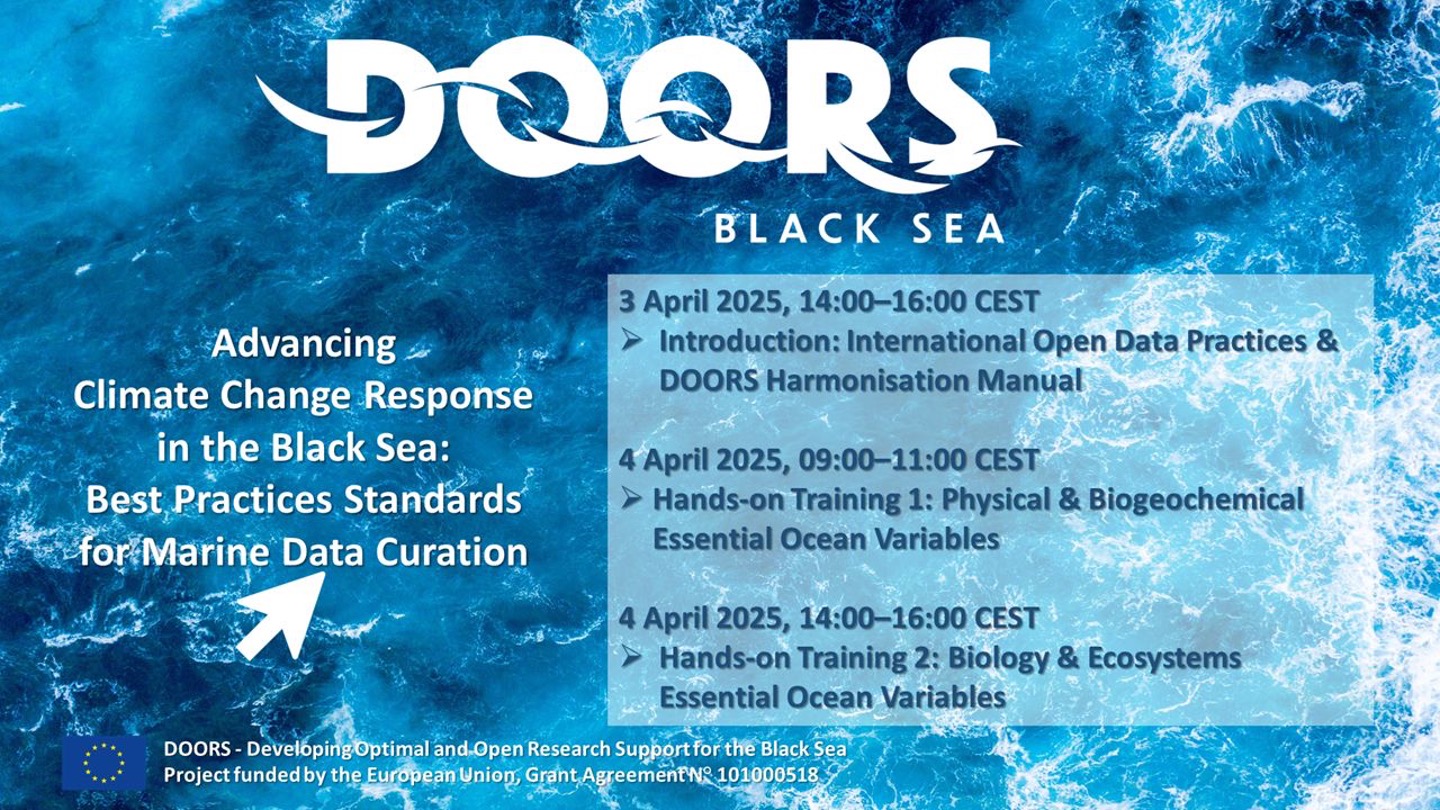
As climate change accelerates, the demand for accurate, high-quality marine data is more critical than ever. The Black Sea, a region particularly vulnerable to environmental shifts, requires harmonised data collection, curation, and dissemination following international standards. Ensuring access to reliable data enables scientists, policymakers, and environmental managers to develop informed strategies for mitigating and adapting to climate impacts. The DOORS project, in collaboration with leading European Marine Research Infrastructures and the European Global Ocean Observing System (EuroGOOS), is addressing this need by promoting best practices in marine data curation for the Black Sea.

Content and activities

This webinar and training will introduce participants to international data standards and the DOORS data harmonisation manual, followed by hands-on sessions on curating data related to GOOS Essential Ocean Variables. Participants will hear from European Marine Research Infrastructures and international experts about tools and approaches to enhance data quality, accessibility, and interoperability, while aligning with FAIR principles.

Learning Objectives

By the end of this training session, participants should be able to:

  • Discuss the importance of standardised marine data management and data needs in the Black Sea;
  • Present the DOORS data harmonisation manual as a key tool for fostering uniformity in data collection and curation in the Black Sea;
  • Examine the specific Essential Ocean Variables (EOVs) and how to manage and curate data related to physical and biogeochemical EOVs;
  • Explore biological and ecosystem data curation;
  • List best practices for managing marine biodiversity data.
    Target Audience

    This event is designed for Black Sea scientists and data managers, as well as all those interested in international marine data management.

    Background

    The Black Sea Accelerator provides a platform for participants to collaborate, learn, and grow their ventures by offering tailored training, mentorship, networking opportunities, and access to resources and funding. Whether they are looking to launch a new venture, scale an existing business, or develop innovative solutions to pressing challenges, the accelerator program equips participants with the knowledge, skills, and support they need to succeed in the blue economy sector and make a positive impact in the Black Sea region.

    Content and activities
    • Introduction and Overview
    • Key Insights of the Financial Modelling
      • Identifying the various applications of financial models.
      • Point out the key components for an accurate model.
    • Presentation of a Modelling Example
    • Open Q&A

    Learning Objectives

    By the end of this training session, participants should be able to:

    • Identify the various applications of financial models.
    • Find out what are the basic components that need to complete the financial model.
    • Point out the key assumptions mandatory to form an accurate financial model.
    • Learn to create and identify the core of financial modelling, the key calculation sheets.
    • Understand the concept of critical financial indicators, exit outcomes.
    • Present and communicate key insights from the financial models.
    Target Audience

    The Black Sea Accelerator participants consist of aspiring entrepreneurs, innovators, and businesses operating within the blue economy sector across the Black Sea region. This diverse group encompasses startups, small and medium enterprises (SMEs), larger enterprises, universities, research institutions, and individuals who have innovative ideas or ventures related to maritime industries, marine conservation, sustainable fisheries, coastal tourism, renewable energy, shipping, and other sectors contributing to the sustainable development of the Black Sea region. They are passionate about leveraging their expertise and resources to address the environmental challenges facing the Black Sea while unlocking economic opportunities through innovation, entrepreneurship, and sustainable business practices.

    Trainers and moderators
    •  Ilias Katris, Senior Consultant in the Management Consulting Services Unit of Kantor
    • Anastasia Flerianou, Analyst at Kantor Management Consultants
    Background

    The Black Sea Accelerator provides a platform for participants to collaborate, learn, and grow their ventures by offering tailored training, mentorship, networking opportunities, and access to resources and funding. Whether they are looking to launch a new venture, scale an existing business, or develop innovative solutions to pressing challenges, the accelerator program equips participants with the knowledge, skills, and support they need to succeed in the blue economy sector and make a positive impact in the Black Sea region.

    Content and activities
    • Intro
    • Practical session:
      • Data Viewer
      • Data Products
      • Simple Data Extraction
      • Jupyter Lab
      • Dashboards 
    • Open Q&A and Wrap-Up

    Learning Objectives

    By the end of this training session, participants should be able to:

    • Operate DOORS Data viewer, Dashboards and Jupyter Notebook
    • Browse the catalogue, view and extract data and use these data in their own applications in connection with the relevant BGA application.
    Target Audience

    The Black Sea Accelerator participants consist of aspiring entrepreneurs, innovators, and businesses operating within the blue economy sector across the Black Sea region. This diverse group encompasses startups, small and medium enterprises (SMEs), larger enterprises, universities, research institutions, and individuals who have innovative ideas or ventures related to maritime industries, marine conservation, sustainable fisheries, coastal tourism, renewable energy, shipping, and other sectors contributing to the sustainable development of the Black Sea region. They are passionate about leveraging their expertise and resources to address the environmental challenges facing the Black Sea while unlocking economic opportunities through innovation, entrepreneurship, and sustainable business practices.

    Trainers and moderators
    • Tonio Fincke, Software Engineer, Brockmann Consult GmbH
    • Eleni Manousiadi, Senior Consultant at Kantor, DOORS
    Background

    The Black Sea Accelerator provides a platform for participants to collaborate, learn, and grow their ventures by offering tailored training, mentorship, networking opportunities, and access to resources and funding. Whether they are looking to launch a new venture, scale an existing business, or develop innovative solutions to pressing challenges, the accelerator program equips participants with the knowledge, skills, and support they need to succeed in the blue economy sector and make a positive impact in the Black Sea region.

    Content and activities
    • Overview of 1-1 mentoring sessions offered
    • Optimizing Recruitment Efforts
    • Designing Visual Investor Presentations
    • Open Q&A and Wrap-Up

    Learning Objectives

    By the end of this training session, participants should be able to:

      • Define the essential characteristics and skills required for their startup.
      • List various recruitment strategies and how to implement them effectively.
      • Describe actionable recruitment strategies to attract and retain the best talent.
      • Create a presentation outline that includes all necessary elements to engage investors.
      • Select and use visual aids that complement and strengthen their presentations.
      Target Audience

      The Black Sea Accelerator participants consist of aspiring entrepreneurs, innovators, and businesses operating within the blue economy sector across the Black Sea region. This diverse group encompasses startups, small and medium enterprises (SMEs), larger enterprises, universities, research institutions, and individuals who have innovative ideas or ventures related to maritime industries, marine conservation, sustainable fisheries, coastal tourism, renewable energy, shipping, and other sectors contributing to the sustainable development of the Black Sea region. They are passionate about leveraging their expertise and resources to address the environmental challenges facing the Black Sea while unlocking economic opportunities through innovation, entrepreneurship, and sustainable business practices.

      Trainers and moderators
      • Ilias Katris, Senior Consultant in the Management Consulting Services Unit of Kantor.
      • Anastasia Flerianou, Analyst at Kantor Management Consultants
      • Eleni Manousiadi, Senior Consultant at Kantor, DOORS
      Background

      The Black Sea Accelerator provides a platform for participants to collaborate, learn, and grow their ventures by offering tailored training, mentorship, networking opportunities, and access to resources and funding. Whether they are looking to launch a new venture, scale an existing business, or develop innovative solutions to pressing challenges, the accelerator program equips participants with the knowledge, skills, and support they need to succeed in the blue economy sector and make a positive impact in the Black Sea region.

      Content and activities
      • Introduction on the mentoring sessions provided by EMBRC
      • Circular Business Model Theory and Tools 
      • Evaluating sustainability performance 

      Learning Objectives

      By the end of this training session, participants should be able to:

        • Explain the concept and benefits of circular economy thinking and its application to business models.
        • Identify opportunities for implementing circular strategies within their business operations and value chains.
        • Utilize the Canvas Business Model framework to map out key components of their circular business models, including value proposition, customer segments, revenue streams, and resource loops.
        • Analyze and evaluate the feasibility and potential impact of their circular business models in terms of economic, environmental, and social sustainability.
        • Iterate and refine their circular business models based on feedback, insights, and best practices shared during the training.
        • Design an approach and identify relevant KPIs for evaluating their sustainability performance.
        Target Audience

        The Black Sea Accelerator participants consist of aspiring entrepreneurs, innovators, and businesses operating within the blue economy sector across the Black Sea region. This diverse group encompasses startups, small and medium enterprises (SMEs), larger enterprises, universities, research institutions, and individuals who have innovative ideas or ventures related to maritime industries, marine conservation, sustainable fisheries, coastal tourism, renewable energy, shipping, and other sectors contributing to the sustainable development of the Black Sea region. They are passionate about leveraging their expertise and resources to address the environmental challenges facing the Black Sea while unlocking economic opportunities through innovation, entrepreneurship, and sustainable business practices.

        Trainers and moderators
        • Dr. Ebun Akinsete,  Head of the Department of Stakeholder Analysis and Decision Support Systems at ATHENA RC and UN SDSN Greece
        • Lydia Papadaki, Researcher at the Alliance of Excellence for Research and Innovation on Αephoria (AE4RIA) 
        • Eleni Manousiadi, Senior Consultant at Kantor, DOORS
        Background

        The Black Sea Accelerator provides a platform for participants to collaborate, learn, and grow their ventures by offering tailored training, mentorship, networking opportunities, and access to resources and funding. Whether they are looking to launch a new venture, scale an existing business, or develop innovative solutions to pressing challenges, the accelerator program equips participants with the knowledge, skills, and support they need to succeed in the blue economy sector and make a positive impact in the Black Sea region.

        Content and activities
        • Intro
        • Pitching Foundations
        • Q&A
        • Practical Exercise - Participant Pitches
        • Investor Q&A

        Learning Objectives

        By the end of this training session, participants should be able to:

        • Articulate the purpose and value proposition of their business idea succinctly.
        • Engage in practical exercises to refine their pitching skills.
        • Gain confidence in presenting their ideas to potential investors.
        • Learn strategies for effectively responding to questions and feedback from investors.
        • Have a clearer understanding of what investors seek in a pitch presentation.
        Target Audience

        The Black Sea Accelerator participants consist of aspiring entrepreneurs, innovators, and businesses operating within the blue economy sector across the Black Sea region. This diverse group encompasses startups, small and medium enterprises (SMEs), larger enterprises, universities, research institutions, and individuals who have innovative ideas or ventures related to maritime industries, marine conservation, sustainable fisheries, coastal tourism, renewable energy, shipping, and other sectors contributing to the sustainable development of the Black Sea region. They are passionate about leveraging their expertise and resources to address the environmental challenges facing the Black Sea while unlocking economic opportunities through innovation, entrepreneurship, and sustainable business practices.

        Trainers and moderators
        • Dr. Ebun Akinsete,  Head of the Department of Stakeholder Analysis and Decision Support Systems at ATHENA RC and UN SDSN Greece
        • Matteo Bocci, Senior policy Expert at Stratégies Mer et Littoral, BRIDGE-BS
        • Eleni Manousiadi, Senior Consultant at Kantor, DOORS
        Background

        The Black Sea Accelerator provides a platform for participants to collaborate, learn, and grow their ventures by offering tailored training, mentorship, networking opportunities, and access to resources and funding. Whether they are looking to launch a new venture, scale an existing business, or develop innovative solutions to pressing challenges, the accelerator program equips participants with the knowledge, skills, and support they need to succeed in the blue economy sector and make a positive impact in the Black Sea region.

        Content and activities
        • Strategic Business Planning: Theory and main elements
        •  Interactive Quiz Session
        • Q&A
        • Preparing for the Next Task: Conducting Your SWOT Analysis
        • Participants feedback

        Learning Objectives

        By the end of this training session, participants should be able to:

        • Understand the fundamental components of a business plan and its importance in the entrepreneurial process.
        • Gain insights into developing a comprehensive corporate profile, including corporate history, mission, vision, and governance structure.
        • Learn techniques for conducting effective business environment analysis, including market and competition analysis, to identify opportunities and threats.
        • Acquire skills in strategic planning, including articulating the idea/product, defining organizational structure, and developing a staffing plan to support business objectives.
        • Learn how to formulate financial projections, including general assumptions, revenue forecasts, investment plans, cost estimations, and financial results assessment.
        • Understand the concept of sensitivity analysis and its role in assessing the impact of changes in assumptions on business outcomes.
        • Explore strategies for developing a marketing plan aligned with the business's overall goals and objectives.
        Target Audience

        The Black Sea Accelerator participants consist of aspiring entrepreneurs, innovators, and businesses operating within the blue economy sector across the Black Sea region. This diverse group encompasses startups, small and medium enterprises (SMEs), larger enterprises, universities, research institutions, and individuals who have innovative ideas or ventures related to maritime industries, marine conservation, sustainable fisheries, coastal tourism, renewable energy, shipping, and other sectors contributing to the sustainable development of the Black Sea region. They are passionate about leveraging their expertise and resources to address the environmental challenges facing the Black Sea while unlocking economic opportunities through innovation, entrepreneurship, and sustainable business practices.

        Trainers and moderators
        • Ilias Katris, Senior Consultant at Kantor
        • Anastasia Flerianou, Analyst at Kantor
        • Matteo Bocci, Senior policy Expert at Stratégies Mer et Littoral, BRIDGE-BS
        • Eleni Manousiadi, Senior Consultant at Kantor, DOORS
        Background

        The Black Sea Accelerator provides a platform for participants to collaborate, learn, and grow their ventures by offering tailored training, mentorship, networking opportunities, and access to resources and funding. Whether they are looking to launch a new venture, scale an existing business, or develop innovative solutions to pressing challenges, the accelerator program equips participants with the knowledge, skills, and support they need to succeed in the blue economy sector and make a positive impact in the Black Sea region.

        Content and activities
        • Business Modelling Theory - Q&A
        • Business Modelling Tools - Q&A
        • Practical session
        • Participants feedback

        Learning Objectives

        By the end of this training session, participants should be able to:

        • Explain the concept and benefits of circular economy thinking and its application to business models.
        • Identify opportunities for implementing circular strategies within their business operations and value chains.
        • Utilize the Canvas Business Model framework to map out key components of their circular business models, including value proposition, customer segments, revenue streams, and resource loops.
        • Analyze and evaluate the feasibility and potential impact of their circular business models in terms of economic, environmental, and social sustainability.
        • Iterate and refine their circular business models based on feedback, insights, and best practices shared during the training.
        • Demonstrate effective communication skills in presenting and pitching their circular business models to stakeholders, investors, and partners.

        Target Audience

        The Black Sea Accelerator participants consist of aspiring entrepreneurs, innovators, and businesses operating within the blue economy sector across the Black Sea region. This diverse group encompasses startups, small and medium enterprises (SMEs), larger enterprises, universities, research institutions, and individuals who have innovative ideas or ventures related to maritime industries, marine conservation, sustainable fisheries, coastal tourism, renewable energy, shipping, and other sectors contributing to the sustainable development of the Black Sea region. They are passionate about leveraging their expertise and resources to address the environmental challenges facing the Black Sea while unlocking economic opportunities through innovation, entrepreneurship, and sustainable business practices.

        Trainers
        • Matteo Bocci, Senior policy Expert at Stratégies Mer et Littoral, BRIDGE-BS
        • Eleni Manousiadi, Senior Consultant at Kantor, DOORS
        • Lydia Papadaki, PhD candidate at the Athens  at University of Economics and Business  and Resercher at the Allieance of Excellence for Research and Innovation on Αephoria (AE4RIA), DOORS
        • Martin Gurria, BRIDGE-BS

        This training session was hosted by the IASPEI Early Career Scientists 2025

        Purpose of this training session

        This short course will introduce participants to basic analysis of State of Polarization (SoP) data in Python language. The first part of the training session will cover the basic Python skills needed to visualize and analyse such large numerical data. In the second half of the session, participants will discover how to access and visualize SoP generated data. For this exercise, a pre-checked HDF5 dataset containing SoP data will be provided. Participants will work on a pre-prepared Jupyter Notebook to perform analysis and other tasks on the provided data.

        Target audience

        Anyone with an elementary background in Python and with the desire to explore State of Polarization (SoP) data.

        Prerequisites

        Familiarity with Jupyter Notebooks environment and basics of Python is welcomed but not strictly required. Both recommended if you want to personally try (on your own brought device/notebook) what the trainers will present.  

        Learning objectives

        With this training session, you will be better positioned to:

        • Define State of Polarisation and Stokes parameters;
        • Calculate the rate of SOP change using Python;
        • Apply standard seismic filters to optical data to extract coherent seismic phases;
        • Discuss the value of SOP applications in combination with DAS-based methods on a global submarine fiber-optic network for ocean monitoring.
        Trainer panel
        • Rudolf Vohnout, Associate Researcher CESNET
        • Martin Šlapák, Associate Researcher CESNET

        This training session was organised as part of the EU-funded SUBMERSE project, which explores sensing capabilities of existing submarine optical fiber networks for research applications.

        Purpose of this training session

        The training session introduces you to data recording, measurement, and analysis methods of State of Polarization (SoP) in optical networks. It will:

        • provide technical insights into SoP and its relation to sensing on deployed fiber cables;
        • support the implementation and validation of sensing devices in the SUBMERSE project.

        Target audience

        Optical networks and telecommunications operators and vendors; researchers in earth sciences and geophysics.

        Requirements

        None or basic knowledge of SOP changes recording and analysis methods. Basic experience in analysis of data generated by sensing network.

        Session outline

        • Introduction
        • Fundamentals of measuring changes of the State of Polarization (SOP) with Novoptel PM 1000
        • Demo of PM1000 GUI
        • Demo of SoP recording and analysis with MATLAB
        • Case study: SOP data analysis for seismic events monitoring

        Learning objectives

        With this training session, you will be better positioned to:

        • define State of Polization through key correlated concepts and models of visualization
        • list causes and effects of polarization changes
        • describe different types of SOP measurement methods, with respective limitations
        • recognize recording types with PM1000
        • analyse SOP data using MATLAB
        • explain benefits of using both Full-Stokes and PBS-based polarimeters for earthquake monitoring.
        Trainer panel
        • Kurosh Bozorgebrahimi, Senior Advisor for Optical Networks at Sikt, Task Leader in the SUBMERSE Project
        • Benjamin Koch​, Research Associate at Universität Paderborn / Novoptel Gmbh
        • Kristina Skarvang Vaskinn​, PhD candidate at NTNU | Centre for Geophysical Forecasting

        This training session was hosted by the IASPEI Early Career Scientists 2025.

        Purpose of this training session

        This short course introduced participants to the fundamentals of Rayleigh-based DAS  data and their management policies and practices. 

        Target audience

        Anyone with an elementary background in programming and curious about the potential of Distributed Acoustic Sensing.

        Prerequisites

        Basic knowledge of FAIR principles in data management

        Learning objectives

        With this training session, you will be better positioned to:

        • Describe the physics of Rayleigh backscattering that allows fiber-optic cables to act as seismic sensors;
        • Navigate cloud storages to programmatically retrieve seismic datasets;
        • Implement workflows to optimize memory usage;
        • Validate and interpret JSON metadata to ensure that seafloor cable coordinates are correct.
        Trainer panel
        • Javier Quinteros, Researcher and GEOFON Data Centre Manager at GFZ
        • Afonso Loureiro, Researcher at ARDITI / Instituto Dom Luiz

        BMD recommends the use of the PlutoF platform for the mobilisation of eDNA datasets to GBIF.

        The OBIS manual covers the mobilisation of marine biodiversity datasets with special additional attention to abiotic conditions of the biodiversity data to align these with the data requirements of EMODnet.

        The GBIF training resources provide access to data mobilisation tutorials covering the widest variety of biodiversity data types and all realms. Marine data at GBIF is exchanged with OBIS.

        ChecklistBank is a platform that supports the publication, analysis, and curation of checklists with emphasis in taxonomic and nomenclatural data. It is an integral part of the infrastructure developed and maintained by the Catalogue of Life (COL) and the Global Biodiversity Information Facility (GBIF).