Autonomous Reef Monitoring Structures (ARMS)
Section outline
-
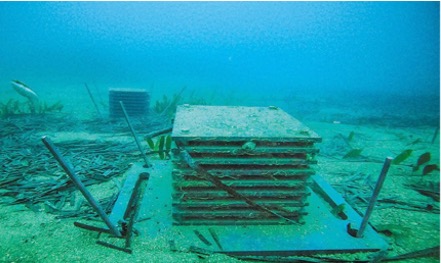
This training focuses on the use of ICT services developed in the Tesseract Virtual Research Environment (VRE) for the network of Autonomous Reef Monitoring Structures (ARMS) placed in the vicinity of marine stations and Long-term Ecological Research Sites (LTER).
This analytical workflow produces species occurrence files and enables to check whether species detected in the samples are alien to the location.
In this section you find: a guide that illustrates background and objectives of the training; a table that explains how to read the workflow’s diagram and the symbols used therein; and, a manual that provides general information on how to access and navigate the Tesseract VRE.
-
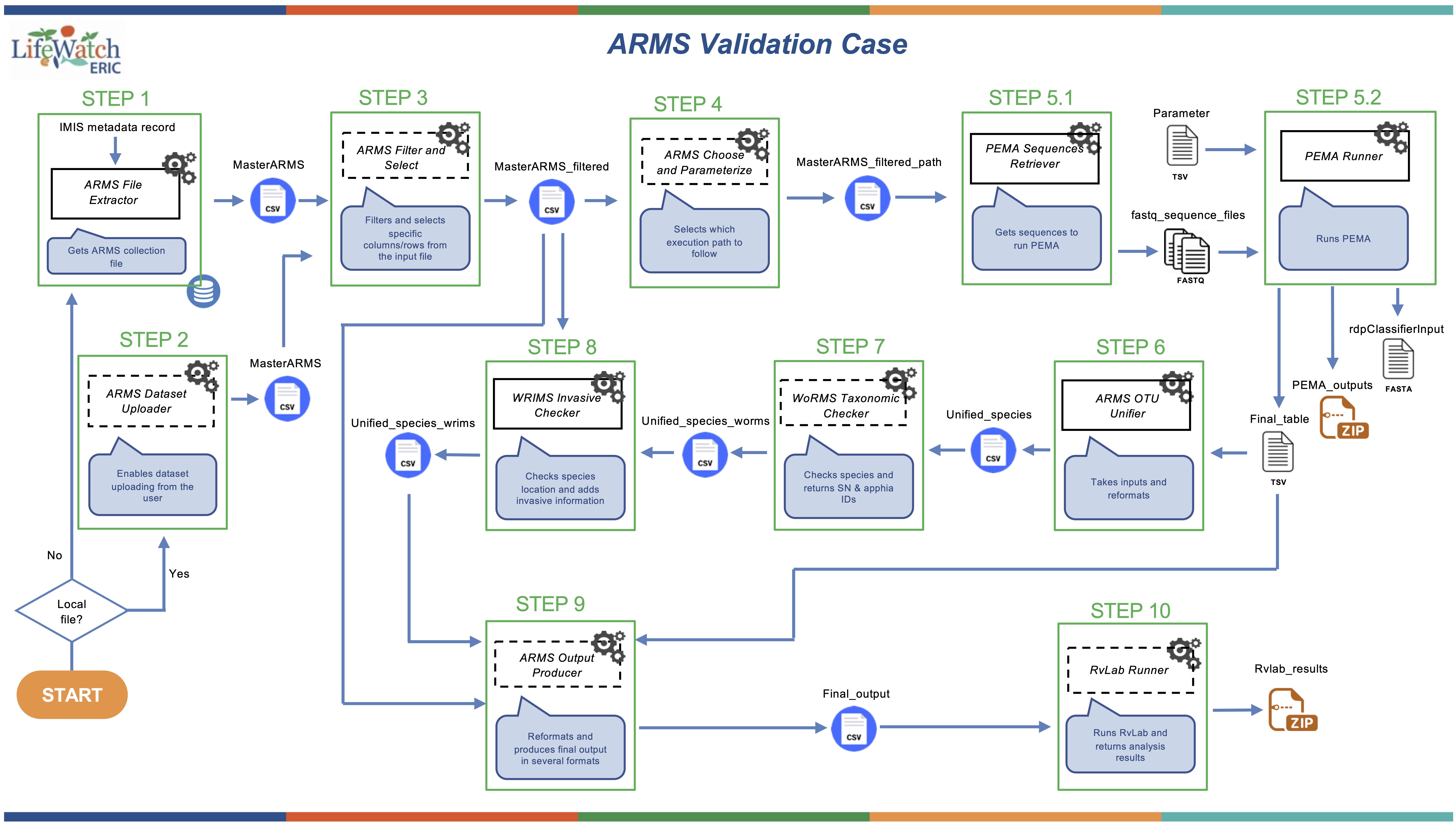
In this section you find: a step-by-step video demonstration on how to run the workflow (each step in the diagram above corresponds to one service of the workflow); and, a series of factsheets - one for each service of the workflow - that illustrate the technical requirements of each service/step.
-
In this section you find a number of additional resources to deepen your knowledge on the case study for which this workflow was developed.
In particular, you find: a link to LifeWatch ERIC website page containing further information on the validation case, including an open knowledge map; a scientific video-presentation of the case study; and, a section where you can post your comments and/or questions for the services and workflow developers.