Section: 4. Occurrences and taxa | Biotope - Cumulative IMPacts of invasive ALien species (CIMPAL) version | LifeWatch ERIC Training Platform

Main course page
  • Biotope - Cumulative IMPacts of invasive ALien species (CIMPAL) version

    What this tutorial is about
    This tutorial will guide you during the use of the CIMPAL (Cumulative IMPacts of invasive ALien species) version of the Biotope vulnerability Workflow, which assesses the habitat vulnerability to the introduction and establishment of Invasive Alien Species (IAS) and the cumulative effects of their negative impacts. The tutorial will clarify how to prepare the input data, as well as the step-by-step use of the workflow.

    About the workflow
    You can access the workflow through My Lifewatch Platform at  https://my.lifewatch.eu under LifeWatch ERIC Products/ LifeWatch VREs/ Biotope/  Run a new workflow/ CIMPAL.
    For further information regarding the overall initiative that leaded to the design of the validation cases and the development of the workflows, please consult  the LifeWatch Internal Joint Initiative dedicated platform: https://www.lifewatch.eu/internal-joint-initiative/workflows/.

    Get in touch with the scientific team

    Heliana TeixeiraHeliana Teixeira, CESAM Centre for Environmental and Marine Studies, Biology Department, University of Aveiro


    Julien RadouxJulien Radoux, UCLouvain 


4. Occurrences and taxa

  • 4. Occurrences and taxa

    This is the Occurrences Dataset Uploader. This service allows you to upload the dataset of species occurrences that you have ‘manually’ prepared (via your own extractor or ‘personal’ database).

    The input is a .txt file with TSV (tab separated values) with up to 6 columns, and its first row should contain the following column headers:

    • decimalLatitude (numeric): the latitude of the observed specimen expressed in decimal degree in WGS 84 coordinate system (EPSG:4326) 
    • decimalLongitude (numeric): the longitude of the observed specimen expressed in decimal degree in WGS 84 coordinate system (EPSG:4326) 
    • scientificName (text): the scientific name of the species
    • year (numeric): the year of the observation
    ATTENTION: Make sure to remove the empty lines at the end of file. To upload this file into the platform you must first convert it to a .zip file.

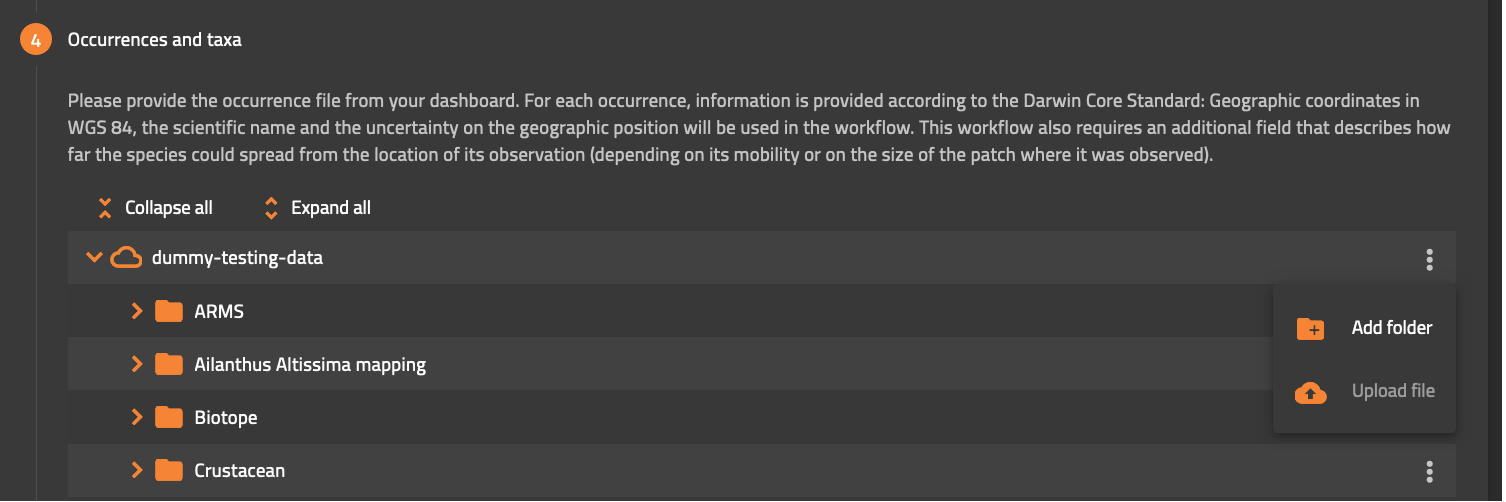
    To upload the .zip file with your dataset, press the three vertical dots at the end of the first line on the expanded file list, and choose ‘Upload file’ (Fig. 6). You can also create new folders to organize your files within the platform and upload your dataset within those new folders, using the ‘Add folder’ option.

    Occurrences Dataset Uploader

    Fig. 6. Occurrences Dataset Uploader

    After the upload is complete, you must select the file before advancing to the next step.

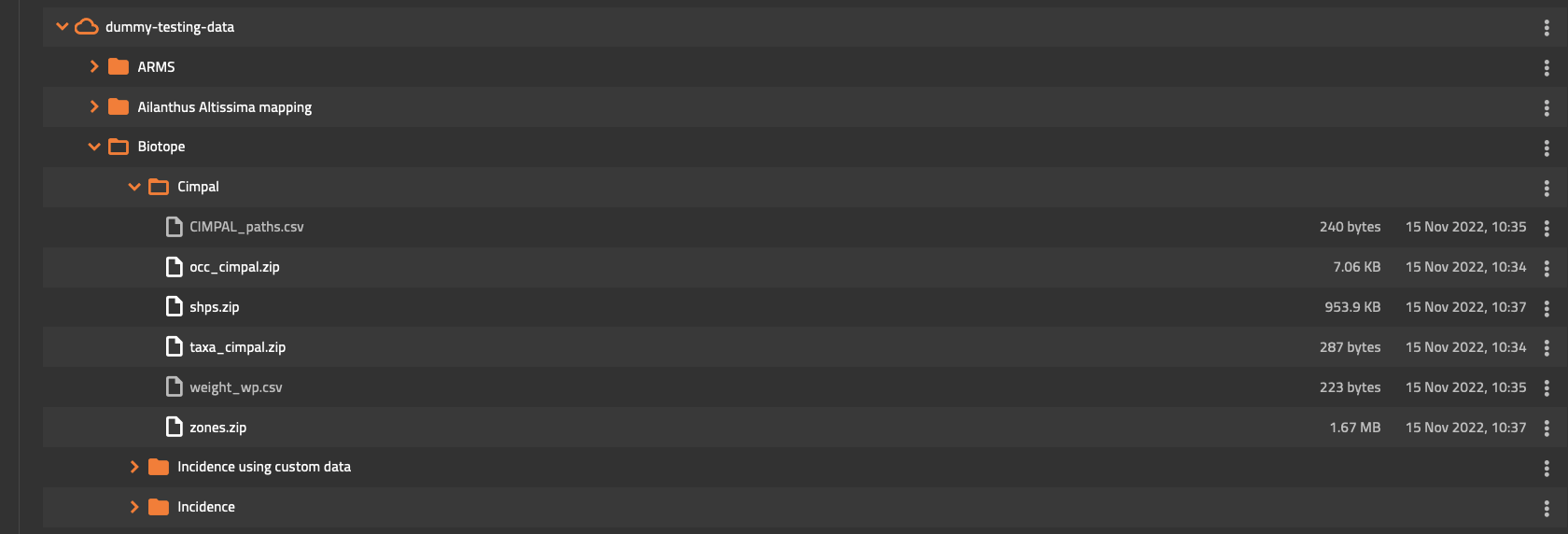
    Note: there is a set of dummy testing data (Fig. 7) that can be used to test the workflow. If that is the case, you should use the files available within the respective folder, and, for this step, the file is named occ_cimpal.zip, as shown in Fig. 7.

    dummy data

    Fig. 7. Dummy testing data, available to test the Biotope - CIMPAL version workflow