eDNA Sampling - Video Tutorial
Section outline
-
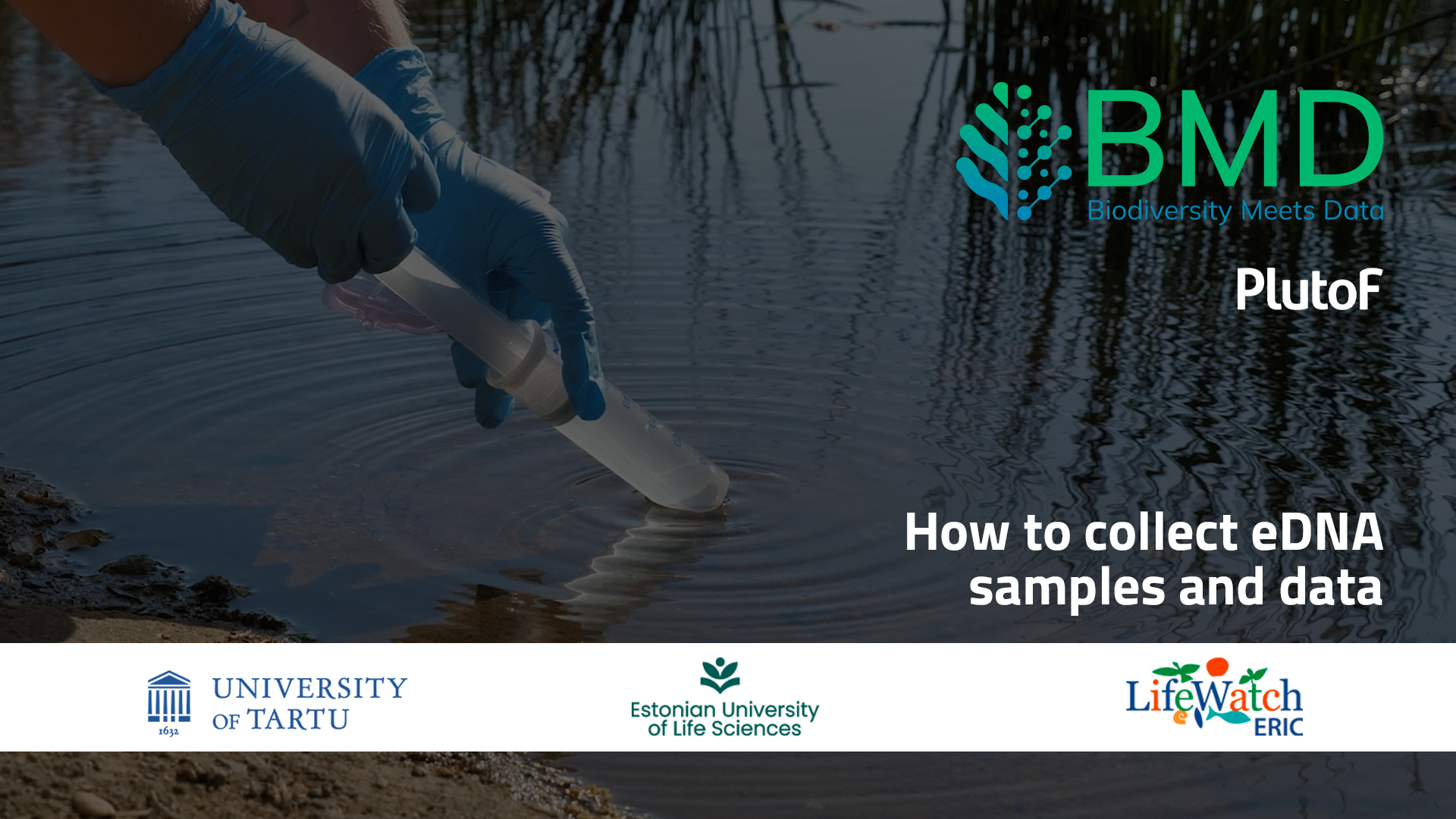
Environmental DNA (eDNA) sampling is an innovative technique that enables the detection of living organisms by analyzing genetic traces released into the environment, such as in bodies of water, without the need to directly capture the species. The success of this method relies not only on proper water filtration in the field and filter preservation using appropriate buffering solutions but, above all, on the accurate tracking of metadata associated with the sample (geographic coordinates, filtered volume, environmental parameters, and equipment used).
Regarding data management, the workflow begins in the field with the PlutoF Go app, which allows for the recording of sample details, either online or offline, by scanning a unique QR code and incorporating automatic geolocation. Subsequently, the data stored in the app is synchronized with the PlutoF web platform's workbench.
Once the metadata integrity has been verified and the eDNA sequencing data linked, the platform enables the generation of a standardized dataset that can be exported and published directly to international repositories like GBIF (Global Biodiversity Information Facility), thereby making biodiversity information accessible worldwide.
-
Here, you will find several training resources linked to the video tutorial above.
-
This tutorial provides a step-by-step guide on managing and mobilizing environmental DNA (eDNA) data using the PlutoF platform. It covers the full data lifecycle, from standardizing metadata to publishing biodiversity datasets to global repositories.
-
The user manuals provided here offer comprehensive guidance on managing, annotating, analyzing, and publishing biological and biodiversity data within the PlutoF platform.
-
The manuals and training resources hosted on the GBIF Training platform offer a comprehensive, modular, and practical framework for the mobilization, management, cleaning, and publication of biodiversity data.
-